

Reference 01440 · Task trainer
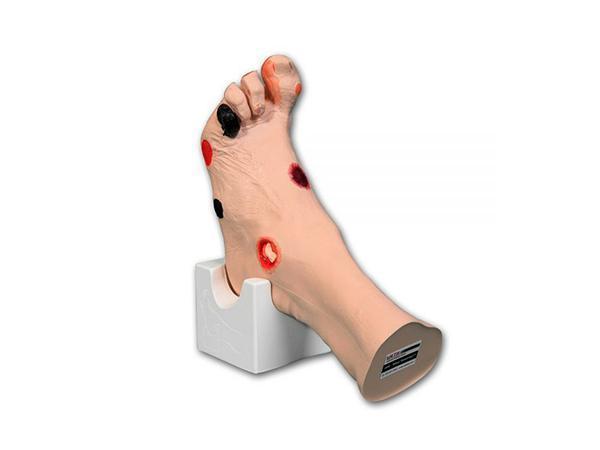
WILMA - Geriatric wound care foot
- Task trainer
- Dermatology
- Main product
- Medicine
Teaching competency testing and skills assessment in the care of patient with different foot wound conditions.
Price on request
Available in Spain, Portugal and Andorra · delivery time given in the proposal
Downloadable data sheet — features, specifications and delivery time, in PDF.
Need a technical report? Ask us for it and we'll send it within 24 h →
Description
What this equipment is and what it's designed for.
Wound Foot is molded from an 80-year-old patient for a true-to-life appearance. There are twenty conditions presented on this model, including Stage 1, 2, 3 and two Stage 4 pressure injuries, DTPI, eschar, neuropathic ulcer, callus, gangrene, maceration, amputation, corn, fungal thickened toenails, blisters, hammer toes, skin staples and more.
Visualizing the location of the various conditions is essential to teaching, especially the non-compliant patient or those cases where cognitive processes or language may be an obstacle.
What you learn
Task trainer modality. The competencies this equipment trains, in the language of the training plan.
- Closer examination of foot wounds
- Wound ressing application and removal
- Consequences of not providing a proper wound care
Related procedures: Bandages · Ulcer · Wound care
Cases and pathologies
The clinical scenarios that can be simulated with this equipment.
- Stage 1 pressure injury on the medial malleolus
- Stage 2 pressure injury on the lateral foot (behind the 5th toe)
- Stage 3 pressure injury on the heel with infection
- Stage 4 pressure injury on the lateral malleolus with exposed tendon and bone (with osteomyelitis)
- Stage 4 pressure injury on the medial foot (behind the great toe) with exposed tendon and slough
- DTPI (Deep Tissue Pressure Injury) on top of foot with “mushy/boggy” feel when palpated
- Unstageable eschar on lateral foot
- Full thickness ulcer, plantar, 1st digit, probable diabetic neuropathic etiology
- Callus under the 4th metatarsal phalangeal joint
- Amputated 2nd toe
- Dry gangrene of the 5th toe, due to ischemia
- Interdigital maceration between the 4th and 5th toe
- Partial thickness wounds between 3rd and 4th toe at 1st joint
- Corn on top of 3rd toe
- Callus at tip of 3rd toe
- Ingrown toenail on the medial aspect of the great toe
- Fungal thickened toenail on the great toe
- Blister on great toe at the first joint
- Hammer toes – 3rd, 4th and 5th toes
- Skin stapled wound
Features and what's included
What the equipment does and what comes in the box, as described by the manufacturer.
Features
Wound Foot is molded from an 80-year old patient for a realistic appearance. Twenty different conditions are presented on this model so you can see and understand how they are different. Great care has been taken to hand paint each wound just as they would be seen on a patient for the most life-like patient simulation.This model is made of flexible material permitting the toes to be moved for closer examination or the application of dressings. This unique material permits the application and removal of dressings without leaving adhesive residue, when used according to supplied instructions. Each model is supplied with a positioning base for the foot which will give hands free access to all the sites when applying dressings or for teaching.
Includes
- 1 Wilma geriatric foot with 20 conditions
- 1 foot stand
Sold separately: carrying case.
Services for this equipment
Services matter: the equipment gets commissioned, the staff know how to use it and maintenance is settled before you start. Include them in your budget and avoid having to raise a second purchase.
- Preventive maintenance We'll let you know when it's due
Documentation
You can download it now or we'll send it on request.
Other related equipment
They train the same technique. Each one approaches it in its own way: none of them replaces this one.
-
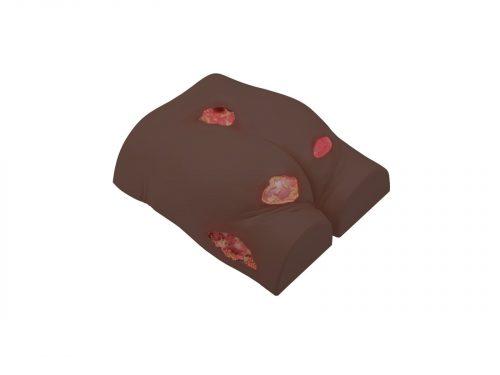 Decubitus Trainer, Dark Skin
See details →
-
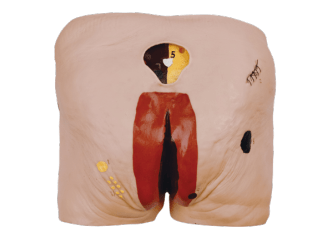 Bedsore Cleansing and Dressing Model
See details →
-
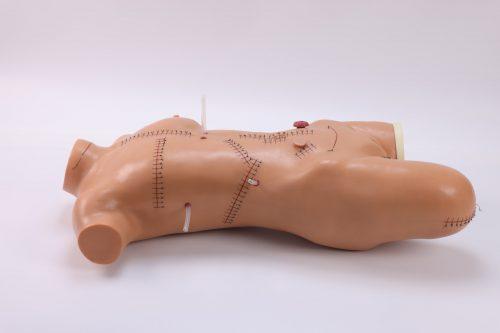 Suturing & Dressing Demonstration Model(Surgical Sally Bandaging Simulator )
See details →
-
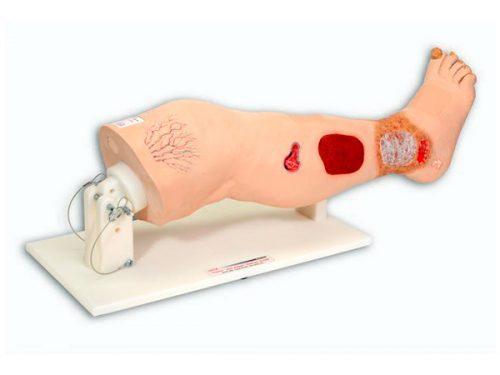 VINNIE - Venous insufficiency leg
See details →
-
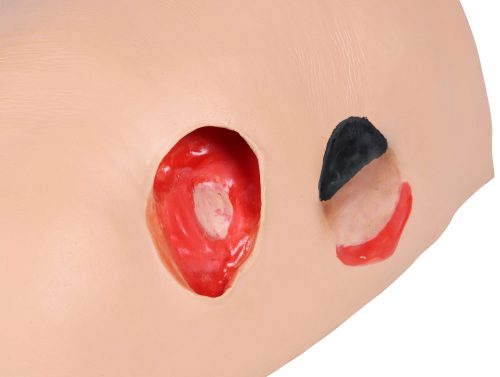 "Decubitus Dan" care and dressing simulator
See details →
-
 Advanced Diabetic Foot Care Model
See details →
Is this equipment going into a new centre?
If you're equipping a classroom or a whole centre, starting from the shopping list works out expensive. Start from the needs assessment.