

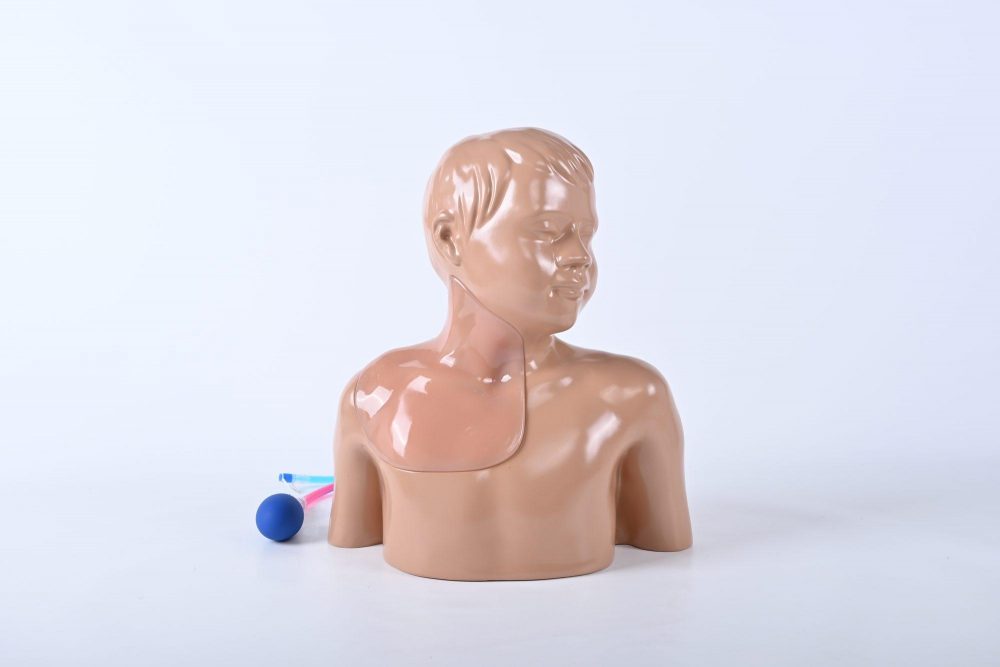
Reference 04297 · Task trainer
Paediatric simulator for ultrasound-guided central line placement
- Task trainer
- Anaesthesiology
- Main product
- Medicine
This paediatric simulator is ideal for practising the placement of central lines, both ultrasound-guided and blind. This model offers an insert with the vascular access anatomy of the upper thorax and the neck, and the brachial plexus. This model is excellent for using traditional external landmarks for blind-insertion central line placement or ultrasound to guide the central venous access procedure.
Price on request
Available in Spain, Portugal and Andorra · delivery time given in the proposal
Downloadable data sheet — features, specifications and delivery time, in PDF.
Need a technical report? Ask us for it and we'll send it within 24 h →
Description
What this equipment is and what it's designed for.
This paediatric simulator is ideal for practising the placement of central lines, both ultrasound-guided and blind. This model offers an insert with the vascular access anatomy of the upper thorax and the neck, and the brachial plexus. This model is excellent for using traditional external landmarks for blind-insertion central line placement or ultrasound to guide the central venous access procedure.
The brachial plexus can be injected with simulated anaesthetics to verify the location of the needle tip. The injected simulated anaesthetic fluid is expelled, which allows repeated use. The tissue has self-healing properties, allowing more than 1000 punctures when used with an 18-21 gauge needle.
What you learn
Task trainer modality. The competencies this equipment trains, in the language of the training plan.
- Blind or ultrasound-guided central catheter placement
- Anatomical exploration using an ultrasound scanner
- Administration of regional anaesthesia
- Brachial plexus nerve block in paediatric patients
Related procedures: Central venous catheterisation (CVC) · Injection and infusion · Nerve Block · Ultrasound
Cases and pathologies
The clinical scenarios that can be simulated with this equipment.
- Central venous access in the critically ill paediatric patient.
- Regional anaesthesia of the upper limb in paediatrics.
- Posterior interscalene block with improved access.
- Accidental arterial puncture in the child as a complication to be avoided.
Features and what's included
What the equipment does and what comes in the box, as described by the manufacturer.
Features
GENERAL:- Dimensions: 55 x 57 x 23 cm
- Weight: 13 kg
- Internal jugular (IJ)
- Subclavian vein
- Infraclavicular vein
- Supraclavicular vein
- Axillary vein
- Superior vena cava (SVC)
- Right atrium
- Right ventricle
- Supraclavicular nerves
- Interscalene nerves
- Infraclavicular nerves
- Enhanced access for the posterior interscalene nerve block
Includes
- Paediatric simulator for ultrasound-guided central venous access
- Simulated blood
Services for this equipment
Services matter: the equipment gets commissioned, the staff know how to use it and maintenance is settled before you start. Include them in your budget and avoid having to raise a second purchase.
- Preventive maintenance We'll let you know when it's due
Documentation
You can download it now or we'll send it on request.
Other related equipment
They train the same technique. Each one approaches it in its own way: none of them replaces this one.
-
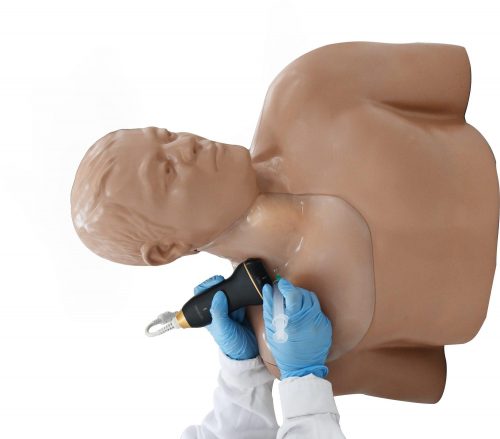 Adult simulator for ultrasound-guided central venous catheter placement
See details →
-
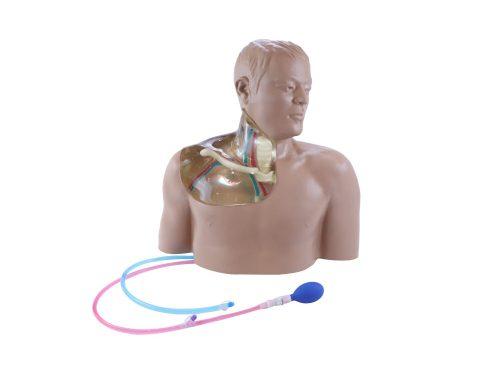 Adult simulator for ultrasound-guided central venous catheter placement - Hand pump, transparent
See details →
-
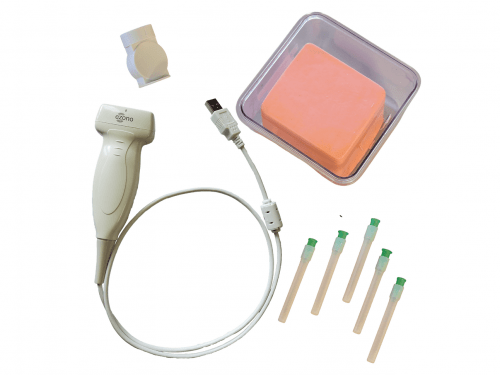 Simulator for ultrasound-guided invasive procedures
See details →
-
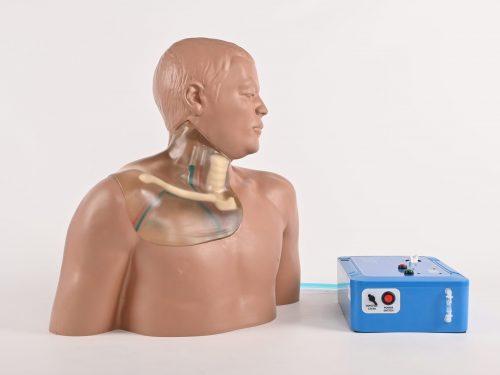 Adult simulator for ultrasound-guided central venous catheter placement - Auto pump, transparent
See details →
-
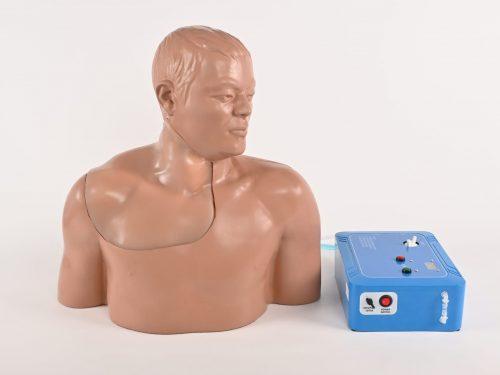 Adult simulator for ultrasound-guided central venous catheterisation and brachial plexus block - Auto pump
See details →
-
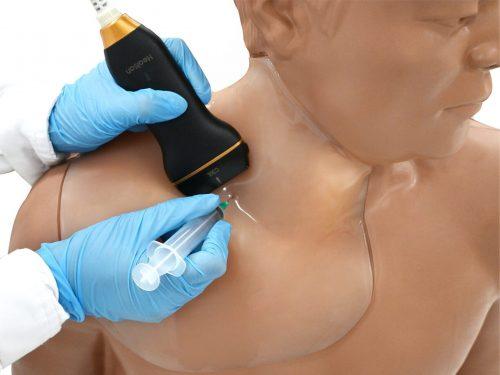 Adult simulator for ultrasound-guided central venous catheterisation and brachial plexus block - Hand pump
See details →
Is this equipment going into a new centre?
If you're equipping a classroom or a whole centre, starting from the shopping list works out expensive. Start from the needs assessment.