

Reference 11383 · Task trainer
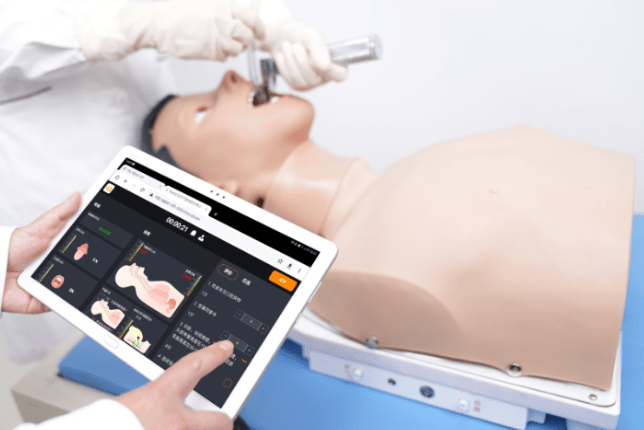
Interactive Airway Management Simulator
- Task trainer
- Anaesthesiology
- Main product
- Medicine
This male model has anatomically correct structures, an ideal choice for practicing airway management skill and for evaluating the intubation depth and accuracy, ventilation and the use of laryngoscope through a tablet.
Price on request
Available in Spain, Portugal and Andorra · delivery time given in the proposal
Downloadable data sheet — features, specifications and delivery time, in PDF.
Need a technical report? Ask us for it and we'll send it within 24 h →
Description
What this equipment is and what it's designed for.
Outline
This male model has anatomically correct structures, an ideal choice for practicing airway management skill and for evaluating the intubation depth and accuracy, ventilation and the use of laryngoscope through a tablet.
Skills Gained
- Mask ventilation
- LMA placement
- Oral airway insertion
- Nasal airway insertion
- Tracheal intubation
- Thyrocricocentesis
- Tracheotomy
Features
- Anatomy: Life-like anatomical structures including nose, mouth, teeth, tongue, pharynx, larynx, uvula, palatoglossal arch, palatopharyngeal arch, tonsil, epiglottis, glottis, cricoid cartilage, thyroid cartilage, trachea, left and right bronchi, lungs, esophagus
· Key Features
About the model
- The airway can be opened by head tilt-chin lift, jaw thrust maneuver and Sniffing Position, and then oral endotracheal intubation and mask ventilation can be conducted
- Positioned well, allowing for detection of head angle and neck bend angle
- Ventilation by using Bag-Valve-Mask after successful intubation. Observable chest rise and fall during the ventilation and ventilation duration and tidal volume can be detected
- If the tube is inserted into the correct position of the airway, bilateral lungs rise can be seen when artificial ventilation is performed; If the tube is inserted too deep(deeper than 23cm) and enters the right bronchus, it will cause one-lung ventilation and alarm will be sounded; or if the tube is mistakenly inserted into the esophagus, alarm will also be sounded
- Sellick maneuver can be performed and pressure applied to the cricoid cartilage can be detected
- Endotracheal intubation can be performed by using devices like intubation tube (ETT), double-lumen tubes (DLTs), Combi-Tube, laryngeal mask, direct laryngoscope, video laryngoscope, flexible video laryngoscope
- Upper incisors are replaceable, and force on incisors during using laryngoscope can be detected
- Cricoid cartilage and thyroid cartilage on the neck feel real, and a “pop” or loss of resistance can be felt if the needle is inserted
- It allows to simulate difficult airway, which leads to a “can’t intubate”
- Consumables like neck skin and cricothyroid membrane are replaceable
- Rechargeable battery for continuous use for more than 4 hours
About the control software
- The Model and Display device (Tablet PC) are connected by Wifi connection. Training and assessment can be performed via Tablet PC, and the final results can be printed
- It has Instructor mode and Training mode, which both can choose laryngoscopes or intubation tube devices. Before training, cuff pressure can be detected and a warning will appear if the pressure abnormal. Adjust the pressure to normal and then start training
- Automatically evaluate the trainee’s ventilation, use of laryngoscope and intubation
- Ventilation: detectable ventilation time(s)/duration/frequency and tidal volume
- Use of laryngoscope: automatic recording of the operation duration of laryngoscope, the force on incisors during using laryngoscope and the force applied to the tongue
- Intubation: detectable flexion of the neck and extension of the head, intubation position and depth, cuff inflation, Sellick maneuver and pressure applied to the cricoid cartilage
- When the tube is inserted into the glottis, if it reaches the correct depth, a dynamic view can be seen in the interface; if the tube is inserted too deep, it will enter bronchus and a bronchus view will appear; if the tube is mistakenly inserted into the esophagus, also it will display real-time view
- There will be the voice prompt such as correct, over-deep or abnormal intubation, correct airway opening, cuff inflation
- In the Instructor mode, trainees can be assessed and the whole operation and alarm event can be recorded in real time. Glanceable result for the training, it can be saved and printed
- The instructor can set the evaluation criteria such as evaluated operation items, adding or modifying the subjective evaluation criteria and the scores
- The training results can be screened according to the time, catheter type, and intubation auxiliary tool; the results and assessment content can be exported all or part only in the Instructor mode
- Training mode offers trainees self and mutual training and learning, and training reports allowing for viewing, exporting and printing
Specifications
- Gross weight (kg): 11.3
- Packing size (cm): 71 x 44 x 31
- Product size(mm): 700×360×260
What you learn
Task trainer modality. The competencies this equipment trains, in the language of the training plan.
- Abrir la vía aérea con maniobra frente-mentón, tracción mandibular y posición de olfateo.
- Ventilar con mascarilla y con bolsa autoinflable controlando el volumen corriente.
- Colocar cánula orofaríngea y nasofaríngea y mascarilla laríngea.
- Intubar con tubo endotraqueal, tubo de doble luz, Combitube, laringoscopio directo, videolaringoscopio y videolaringoscopio flexible.
- Aplicar la maniobra de Sellick controlando la presión sobre el cricoides.
- Reducir la fuerza sobre los incisivos durante la laringoscopia.
Related procedures: Airway management · TNG / Tracheotomy
Cases and pathologies
The clinical scenarios that can be simulated with this equipment.
- Vía aérea difícil y escenario de intubación imposible.
- Intubación selectiva del bronquio derecho con ventilación unipulmonar.
- Intubación esofágica accidental.
- Lesión dental por mal apoyo del laringoscopio.
- Presión anómala del balón antes de iniciar la maniobra.
Features and what's included
What the equipment does and what comes in the box, as described by the manufacturer.
Features
- Anatomía completa: nariz, boca, dientes, lengua, faringe, laringe, úvula, amígdalas, epiglotis, glotis, cartílagos cricoides y tiroides, tráquea, bronquios, pulmones y esófago.
- Detecta el ángulo de la cabeza y la flexión del cuello, la posición y la profundidad del tubo y el inflado del balón.
- Alarma por intubación esofágica o por introducción del tubo más allá de 23 cm.
- Incisivos superiores sustituibles con medición de la fuerza ejercida.
- Piel del cuello y membrana cricotiroidea sustituibles; batería con más de 4 horas de uso continuo.
- Software en tableta por wifi, con modo instructor y modo entrenamiento, criterios de evaluación configurables e informes exportables e imprimibles.
Services for this equipment
Services matter: the equipment gets commissioned, the staff know how to use it and maintenance is settled before you start. Include them in your budget and avoid having to raise a second purchase.
- Preventive maintenance We'll let you know when it's due
Documentation
You can download it now or we'll send it on request.
Other related equipment
They train the same technique. Each one approaches it in its own way: none of them replaces this one.
-
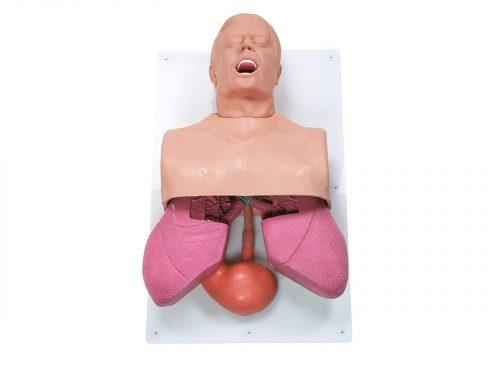 Adult Airway Management Trainer
See details →
-
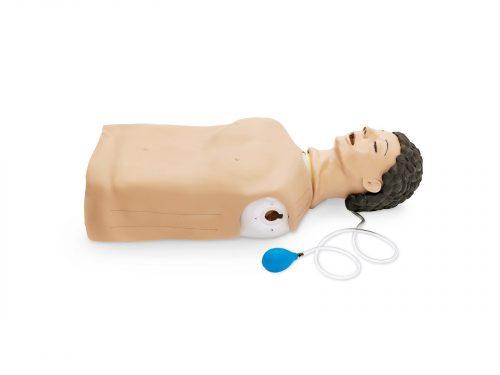 Adult Airway Management Trainer
See details →
-
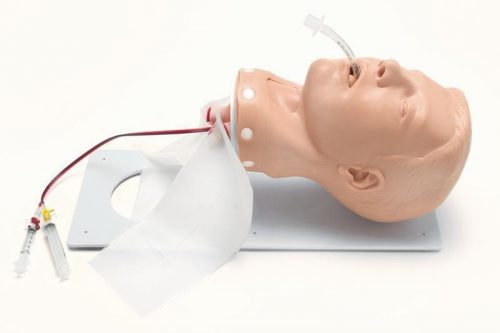 Adult Deluxe Airway Management Trainer
See details →
-
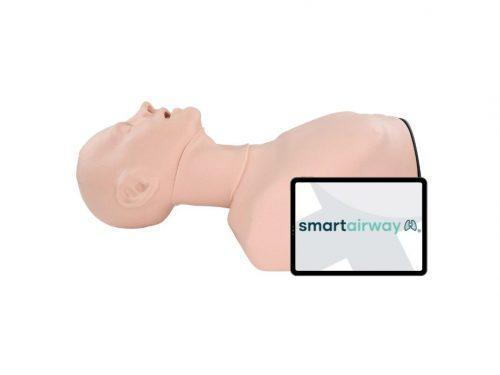 Adult Smart Sensor Airway Simulator - Smart Airway Adult
See details →
-
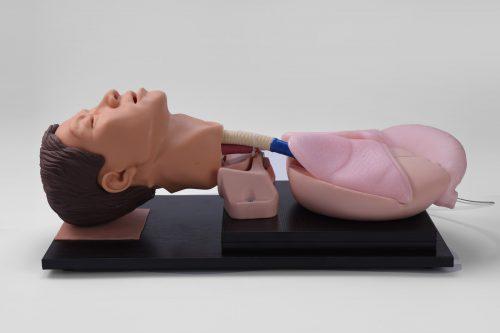 Adult Tracheal Intubation Training Model
See details →
-
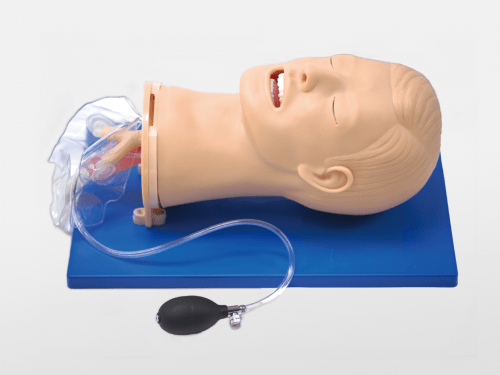 Advanced Adult Airway Management Model
See details →
Is this equipment going into a new centre?
If you're equipping a classroom or a whole centre, starting from the shopping list works out expensive. Start from the needs assessment.