

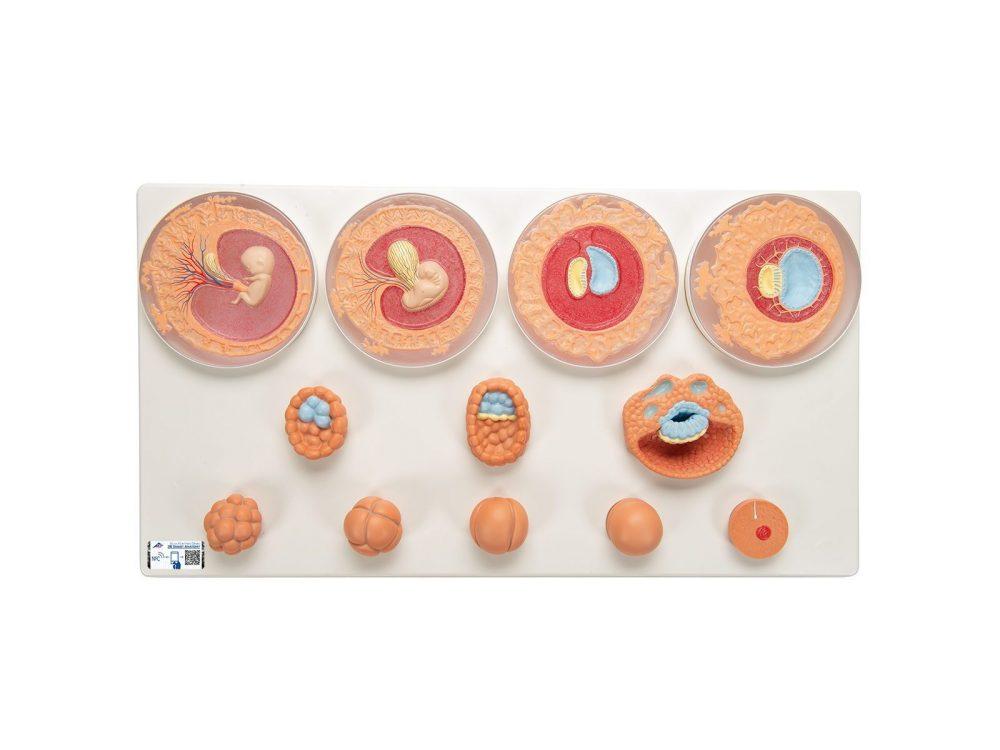
Reference 01154 · Anatomical model
Embryonic development (12 stages)
- Anatomical model
- Obstetrics
- Main product
- Medicine
The model represents the development of the human germ cells from fertilisation until the end of the 2nd month of pregnancy in 12 stages. Each stage can be removed from the common stand as an individual part and can be purposefully used for teaching and tests for the embryological specialist field.
Price on request
Available in Spain, Portugal and Andorra · delivery time given in the proposal
Downloadable data sheet — features, specifications and delivery time, in PDF.
Need a technical report? Ask us for it and we'll send it within 24 h →
Description
What this equipment is and what it's designed for.
The model represents the development of the human germ cells from fertilisation until the end of the 2nd month of pregnancy in 12 stages. Each stage can be removed from the common stand as an individual part and can be purposefully used for teaching and tests for the embryological specialist field.
- Ovum at time of fertilisation (conception) with male gamete (sperm)
- Zygote at 2-cell stage, approx. 30 hours after fertilisation
- Zygote at 4-cell stage, after around 40-50 hours
- Zygote at 8-cell stage, after around 55 hours
- Morula
- Blastocyst after around 4 days
- Blastocyst after around 5 days
- Blastocyst after around 8-9 days
- Germ cells at approx. 11th day
- Germ cells at approx. 20th day
- Embryo at around the end of the 1st month of pregnancy
- Embryo at around the end of the 2nd month of pregnancy
What you learn
Anatomical model modality. The competencies this equipment trains, in the language of the training plan.
- Identification of the stages of embryonic development
- Description of fertilisation
- Recognition of the zygote, the morula and the blastocyst
- Explanation of the timeline of embryonic development
- Comparison of the embryo at the end of the first and of the second month
Related procedures: Childbirth
Features and what's included
What the equipment does and what comes in the box, as described by the manufacturer.
Features
- Represents the development of the human embryo in 12 stages
- Covers from fertilisation to the end of the second month of gestation
- Each stage is represented by an individual piece
- The pieces are detached from the joint base for use in class or in examinations
Includes
- 12 Individual pieces, one for each stage of development
- 1 Joint base
Services for this equipment
Services matter: the equipment gets commissioned, the staff know how to use it and maintenance is settled before you start. Include them in your budget and avoid having to raise a second purchase.
- Preventive maintenance We'll let you know when it's due
Documentation
You can download it now or we'll send it on request.
Other related equipment
They train the same technique. Each one approaches it in its own way: none of them replaces this one.

Is this equipment going into a new centre?
If you're equipping a classroom or a whole centre, starting from the shopping list works out expensive. Start from the needs assessment.