

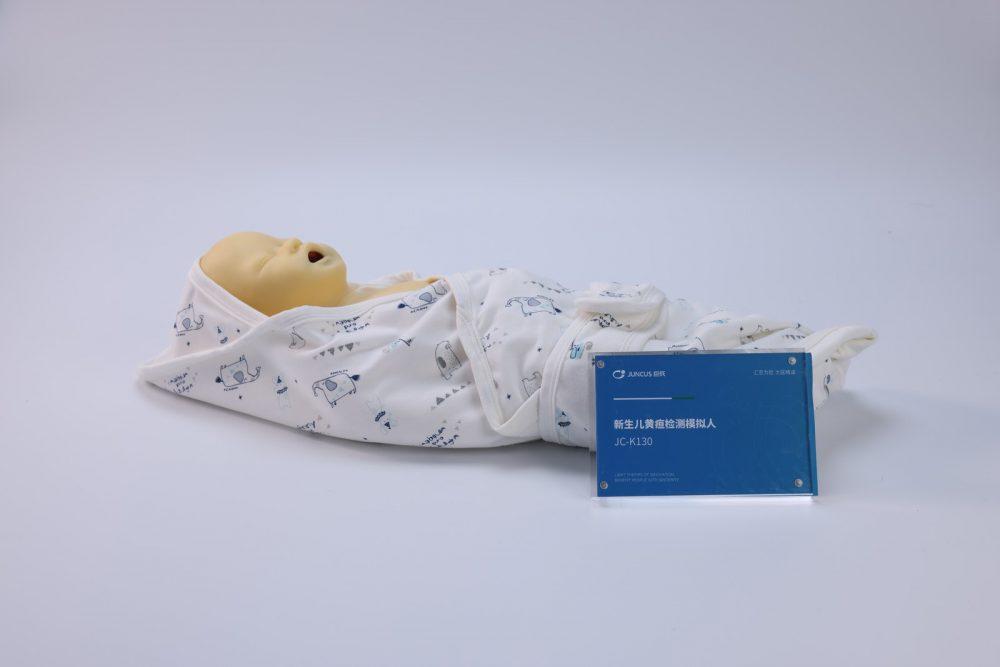
Reference 10812 · Task trainer
Down Syndrome Infant Simulator
- Task trainer
- Paediatrics
- Main product
- Nursing
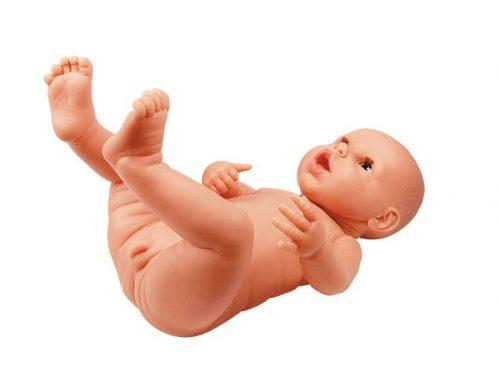
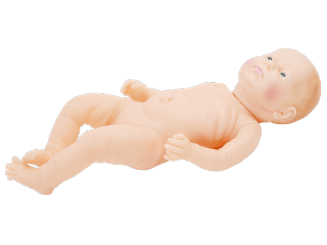
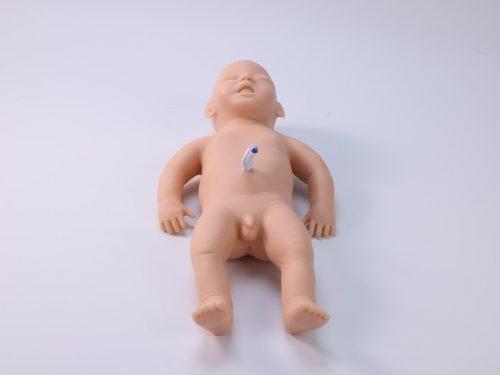
This model simulates a Down syndrome baby, featuring a realistic appearance, tactile feel, and complete anatomical structure. It is designed for nursing training, enabling practice in washing, dressing, and bathing.
Price on request
Available in Spain, Portugal and Andorra · delivery time given in the proposal
Downloadable data sheet — features, specifications and delivery time, in PDF.
Need a technical report? Ask us for it and we'll send it within 24 h →
Description
What this equipment is and what it's designed for.
Product No.: PC-PEE041.02
 Overview
This model simulates a Down syndrome baby, featuring a realistic appearance, tactile feel, and complete anatomical structure. It is designed for nursing training, enabling practice in washing, dressing, and bathing.
 Anatomy
The skin is soft and elastic, closely mimicking real infant skin.
It features a unique “characteristic facies” with widened eyes, small eye fissures, upward outer corners, and a collapsed nose bridge, representing congenital malformations.
The anatomical structure includes a flat occipital region and through hands for realistic handling.
 Realism
Enables practical training in facial washing, hair combing, dressing, and other caregiving tasks.
The lifelike appearance and cute design help promote empathy and understanding in children regarding those with physical disabilities.
 Cleaning
Clean the model with a damp cloth using mild soap and warm water; avoid harsh chemicals or abrasive materials.
Allow the model to air dry completely before storage.
Store in a cool, dry place, away from direct sunlight to maintain quality.
Specifications
|
Package (kg) & Dimension(cm) LxWxH |
4.8 |
75.5 |
25.5 |
20 |
What you learn
Task trainer modality. The competencies this equipment trains, in the language of the training plan.
- Recognise the physical features of Down syndrome in the infant.
- Wash the face and comb the hair.
- Dress and bathe the infant safely.
- Handle the child with a disability with appropriate care.
Related procedures: Infant care (bathing, nappy changing and hygiene) · Patient care · Patient mobilisation and transfer
Cases and pathologies
The clinical scenarios that can be simulated with this equipment.
- Down syndrome in the infant.
- Associated congenital features: flattened occiput and single palmar crease.
- Nursing care of the child with a disability.
- Education in empathy towards people with disabilities.
Features and what's included
What the equipment does and what comes in the box, as described by the manufacturer.
Features
- Infant with complete anatomy and soft, elastic skin.
- Characteristic facies: widely spaced eyes, small upslanting palpebral fissures and a flattened nasal bridge.
- Flattened occiput and single palmar crease.
- Suitable for washing, hair care, dressing and bathing.
- Packed weight 4.8 kg and dimensions 75.5 x 25.5 x 20 cm.
Services for this equipment
Services matter: the equipment gets commissioned, the staff know how to use it and maintenance is settled before you start. Include them in your budget and avoid having to raise a second purchase.
- Preventive maintenance We'll let you know when it's due
Documentation
You can download it now or we'll send it on request.
Other related equipment
They train the same technique. Each one approaches it in its own way: none of them replaces this one.
Is this equipment going into a new centre?
If you're equipping a classroom or a whole centre, starting from the shopping list works out expensive. Start from the needs assessment.