

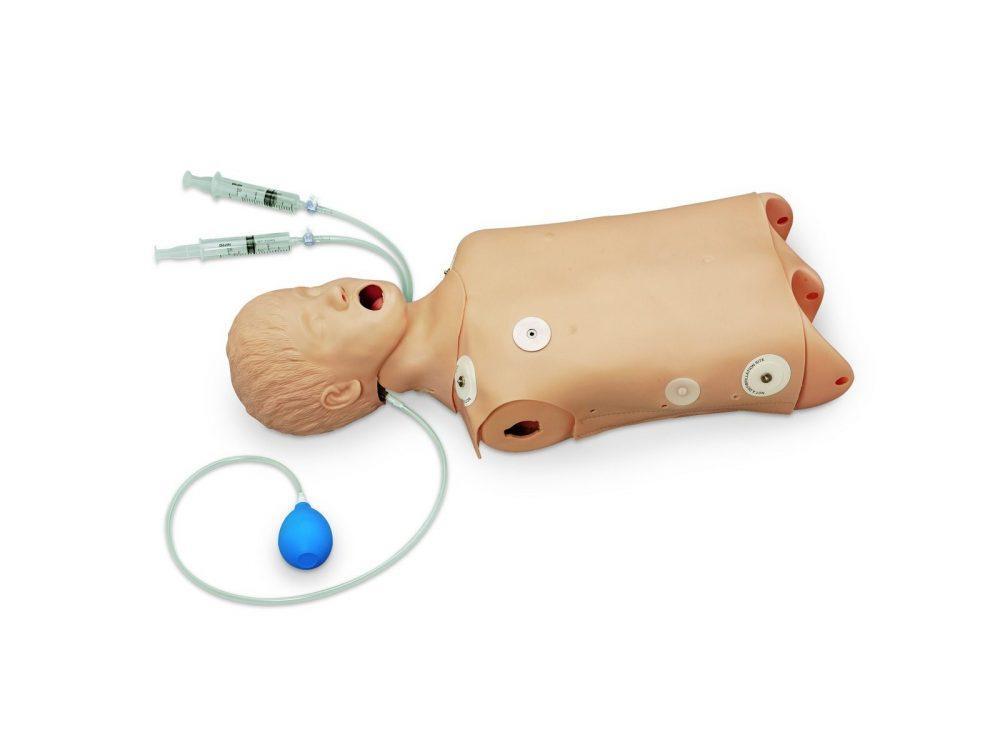
Reference 12621 · Patient simulator
Advanced Child CPR/Airway Management Torso with Defibrillation Features
- Patient simulator
- Emergencies
- Main product
- Medicine
Present your students with the challenges they may face in the real world. Trainer offers tongue swelling and laryngospasm in addition to all the features on the standard models.
Price on request
Available in Spain, Portugal and Andorra · delivery time given in the proposal
Downloadable data sheet — features, specifications and delivery time, in PDF.
Need a technical report? Ask us for it and we'll send it within 24 h →
Description
What this equipment is and what it's designed for.
Present your students with the challenges they may face in the real world. Trainer offers tongue swelling and laryngospasm in addition to all the features on the standard models.
This advanced airway management trainer is perfect for practicing skills on pediatric patients and represents the size of an 5-year-old patient. Practice intubation, ventilation, suction, CPR, and jaw thrust techniques.
Realistic anatomy and landmarks include teeth, tongue, oral and nasal pharynx, larynx, epiglottis, arytenoids, false and true vocal cords, trachea, lungs, esophagus, and stomach. The trainer allows you to practice oral, digital, and nasal intubation, as well as E.T., E.O.A., P.T.L., L.M.A., E.G.T.A., Combitube®, and King System insertion. Separate lungs for auscultation. Manual carotid pulse. Inflatable stomach bladder indicates esophageal insufflation. With its slightly anterior position, swelling tongue, and vocal cords, the Advanced Child Airway Management Trainer is a great trainer for introductory as well as advanced training.
Advanced Child Airway Management Trainer, lets you practice defibrillation using standard manual, automatic, or semi-automatic external monitor defibrillators. An internal load box absorbs the full strength of every shock to protect students and equipment. lt is also possible to monitor the manikin, just like a real patient, and is compatible with all standard brands and types of defibrillators, monitors, and patient simulators. Features four ECG sites and two defibrillation sites. This torso is designed to be the foundation of the Child CRiSis™ system. Arms and legs can be added later to provide IV access, intraosseous infusions, and blood pressure monitoring. If you do not have an ECG simulator and want to practice ECG recognition, you may want to consider adding the Interactive ECG Simulator to your training.
Manikin can be used with Supraglottic airway devices for airway training.
What you learn
Patient simulator modality. The competencies this equipment trains, in the language of the training plan.
- Oral, digital and nasal intubation
- Endotracheal intubation
- Placement of oesophageal obturator, pharyngotracheal airway, laryngeal mask, oesophago-gastric tube, Combitube and King system
- Ventilation and jaw thrust
- Airway suctioning
- CPR techniques
- Manual, automated and semi-automated defibrillation
- ECG monitoring
- Lung auscultation
- Recognition of oesophageal insufflation
Related procedures: AED/SAED · Airway management · Basic life support · TNG / Tracheotomy
Cases and pathologies
The clinical scenarios that can be simulated with this equipment.
- Tongue swelling
- Laryngospasm
- Difficult airway in the paediatric patient
- Oesophageal insufflation due to incorrect intubation
- Paediatric cardiorespiratory arrest with shockable rhythms
Features and what's included
What the equipment does and what comes in the box, as described by the manufacturer.
Features
AIRWAY:- Represents the size of an 8-year-old patient
- Features tongue swelling and laryngospasm
- Anatomical landmarks: teeth, tongue, oral and nasal pharynx, larynx, epiglottis, arytenoids, false and true vocal cords, trachea, lungs, oesophagus and stomach
- Slightly anterior airway position
- Separate lungs for auscultation
- Inflatable stomach chamber, which indicates oesophageal insufflation
- Compatible with supraglottic airway devices
- Four ECG sites and two defibrillation sites
- Internal device that fully absorbs the shocks in order to protect students and equipment
- Compatible with all standard makes and types of defibrillators, monitors and patient simulators
- Manual carotid pulse
- Designed to be the basis of the child CRiSis system
Modules
They extend what this equipment teaches. They are requested separately and are not included in the quotation by default.
- ARMS AND PARTS OF THE CRiSis CHILD SYSTEM (sold separately): they add intravenous access, intraosseous infusions and blood pressure monitoring.
- INTERACTIVE ECG SIMULATOR (sold separately): allows rhythm recognition to be practised when no ECG simulator is available.
Services for this equipment
Services matter: the equipment gets commissioned, the staff know how to use it and maintenance is settled before you start. Include them in your budget and avoid having to raise a second purchase.
- Preventive maintenance We'll let you know when it's due
Documentation
You can download it now or we'll send it on request.
Other related equipment
They train the same technique. Each one approaches it in its own way: none of them replaces this one.
-
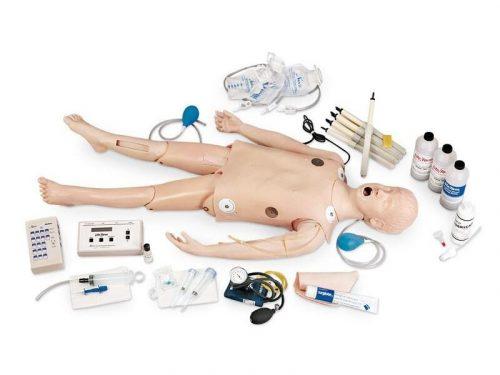 Deluxe CRiSis children's emergency manikin with ECG simulator
See details →
-
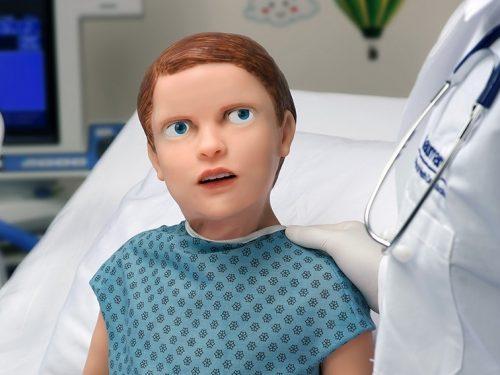 HAL Paediatric - HI-FI paediatric simulator (5 years) - UNI
See details →
-
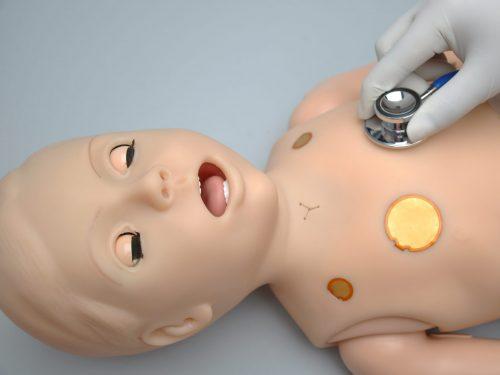 PED HAL - Advanced Paediatric simulator (1 year) - UNI
See details →
- PED HAL - Paediatric simulator (5 years) - 3000 Series See details →
-
 HAL - Advanced Multipurpose Patient Simulator
See details →
-
 HAL - HI-FI patient simulator - UNI
See details →
Is this equipment going into a new centre?
If you're equipping a classroom or a whole centre, starting from the shopping list works out expensive. Start from the needs assessment.