

Reference 02705 · Anatomical model
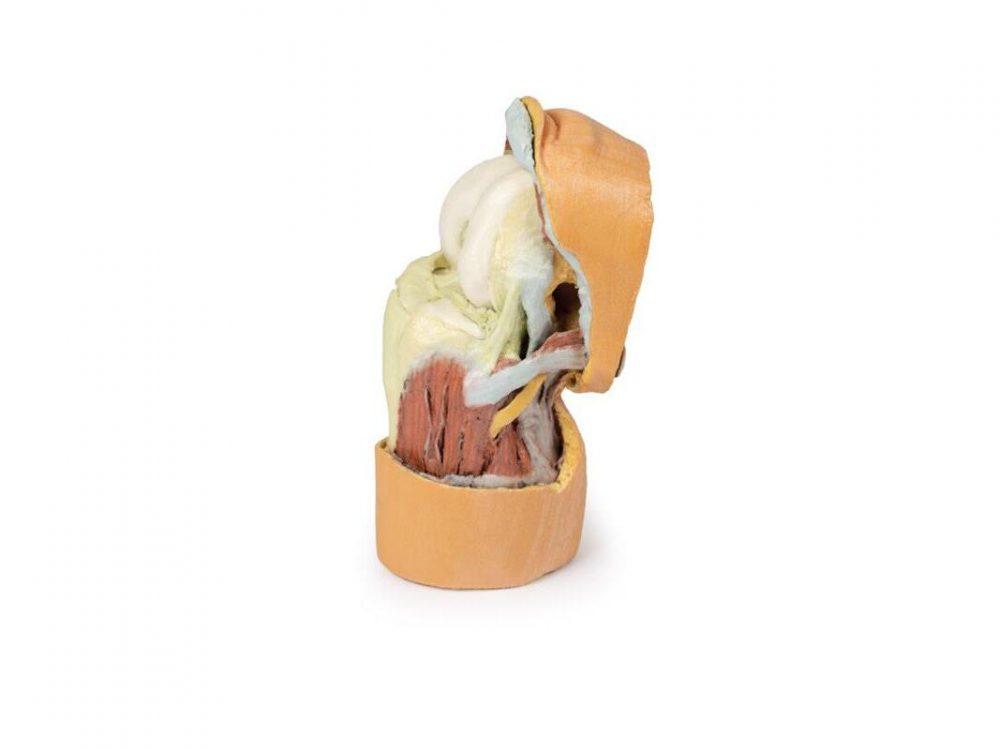
3D ANATOMY - Deep dissection of the knee joint, flexed
- Anatomical model
- Orthopaedic surgery
- Main product
- Medicine
Left knee in flexion with the joint capsule opened and the surrounding muscles, ligaments and neurovascular structures.
Price on request
Available in Spain, Portugal and Andorra · delivery time given in the proposal
Downloadable data sheet — features, specifications and delivery time, in PDF.
Need a technical report? Ask us for it and we'll send it within 24 h →
Description
What this equipment is and what it's designed for.
This 3D printed specimen shows a left knee joint in flexion, highlighting the internal joint capsule and surrounding muscles, ligaments, and neurovascular structures.
Proximal Thigh & Popliteal Fossa
The proximal section includes parts of the quadriceps femoris and sartorius, with the iliotibial tract visible. The popliteal fossa displays the popliteal vessels, tibial nerve, and common peroneal nerve. Posteriorly, insertions of the adductor magnus, gracilis, and posterior thigh muscles (biceps femoris, semitendinosus, semimembranosus) are preserved.
Distal Leg & Neurovascular Structures
The distal section shows muscles of the anterior, lateral, and posterior compartments. Key vessels and nerves include the anterior tibial artery and deep peroneal nerve, posterior tibial artery and tibial nerve, and the fibular vessels.
Ligaments & Menisci
Anteriorly, remnants of the quadriceps tendon and patellar ligament remain. The anterior and posterior cruciate ligaments and menisci are visible between the femur and tibia. Medially, the tibial collateral ligament and semitendinosus insertion are preserved; laterally, the fibular collateral ligament, biceps femoris tendon, and common peroneal nerve are exposed.
What you learn
Anatomical model modality. The competencies this equipment trains, in the language of the training plan.
- Recognise the deep planes of the knee in flexion.
- Identify the cruciate ligaments along their intra-articular course.
- Follow the vessels and nerves of the posterior aspect.
- Relate the dissection to reconstructive ligament surgery.
Cases and pathologies
The clinical scenarios that can be simulated with this equipment.
- Anterior cruciate ligament reconstruction.
- Multiligament injury from knee dislocation.
- Associated popliteal vascular injury.
- Arthroscopy and approaches to the knee.
Features and what's included
What the equipment does and what comes in the box, as described by the manufacturer.
Features
- 3D printed replica made from radiological data or from a dissected cadaveric specimen, not a stylised model: this is real anatomy.
- Developed and checked by the anatomists of the Human Anatomy Teaching Centre at Monash University.
- Colourised to distinguish muscle, nerve, artery, vein and bone, and to separate territories or segments.
- Not human tissue: no restrictions on transport, import or use in institutions without permission to work with cadavers.
- Avoids the ethical and preservation problems that come with plastination.
- Supplied with a detailed description of the anatomy represented in the specimen.
Services for this equipment
Services matter: the equipment gets commissioned, the staff know how to use it and maintenance is settled before you start. Include them in your budget and avoid having to raise a second purchase.
- Preventive maintenance We'll let you know when it's due
Documentation
You can download it now or we'll send it on request.
Other related equipment
They share a specialty with this one. They train different things: none of them replaces it.
-
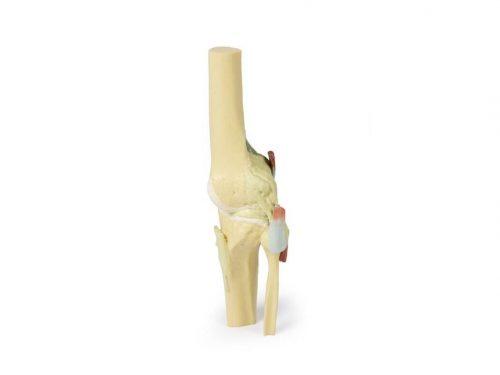 3D ANATOMY - Knee joint, extended
See details →
-
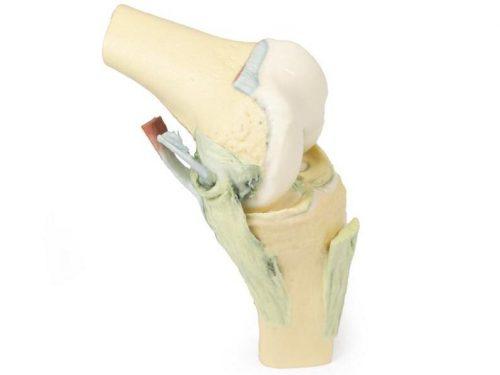 3D ANATOMY - Knee joint, flexed
See details →
-
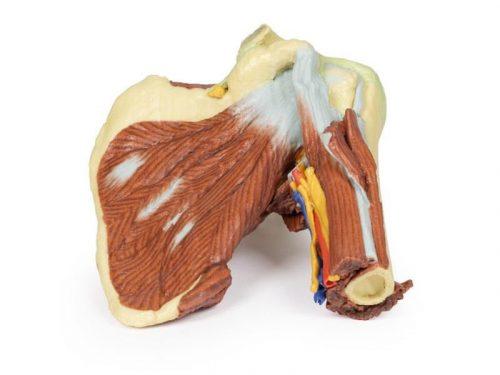 3D ANATOMY - Left shoulder, deep dissection of the joint, musculature, nerves and vessels
See details →
-
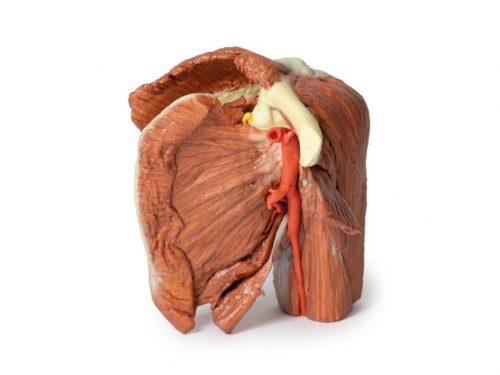 3D ANATOMY - Left shoulder, superficial muscles and axillary/brachial artery
See details →
-
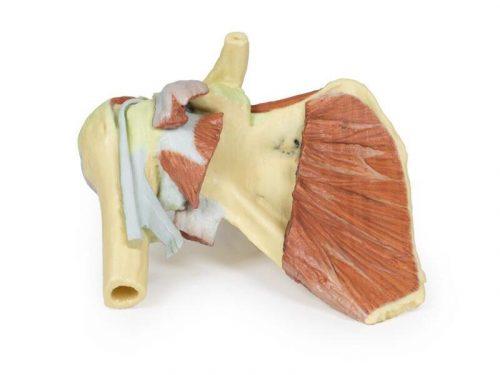 3D ANATOMY - Right shoulder, deep dissection of shoulder girdle, lateral clavicle and humerus
See details →
-
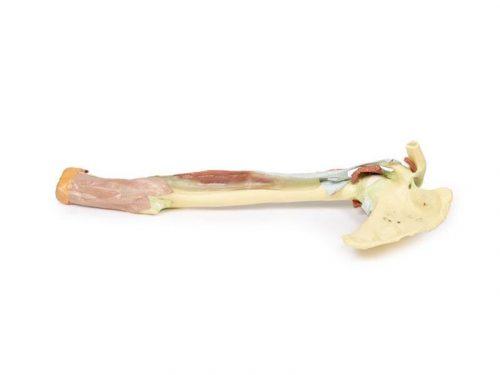 3D ANATOMY - Upper limb (biceps, bones and ligaments)
See details →
Is this equipment going into a new centre?
If you're equipping a classroom or a whole centre, starting from the shopping list works out expensive. Start from the needs assessment.