

Training modality · 11 items
Digital tools
Clinical reasoning and decision-making.
Scale and repetition where physical equipment cannot reach.
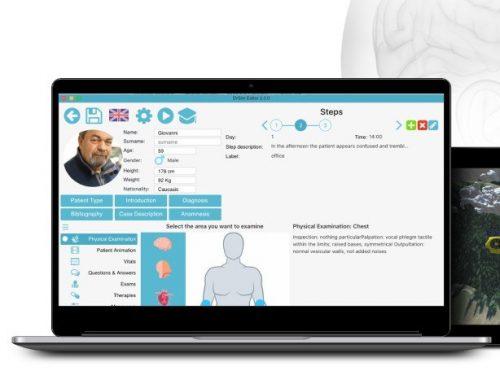
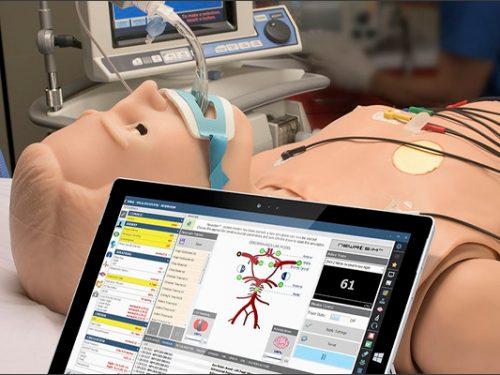
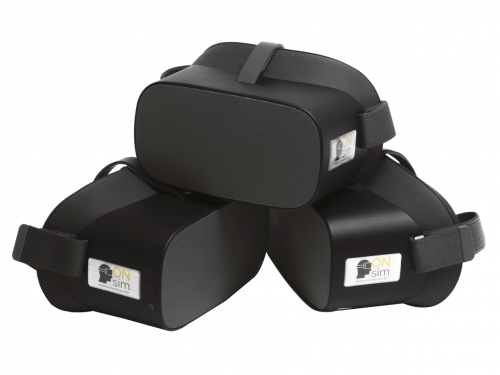
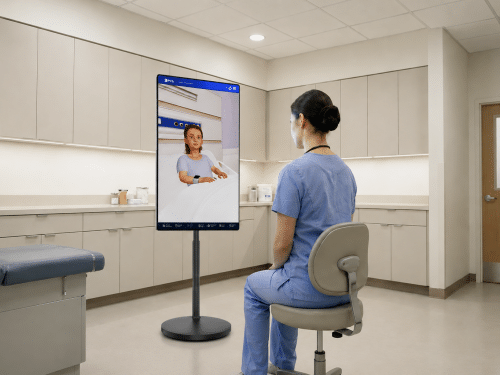
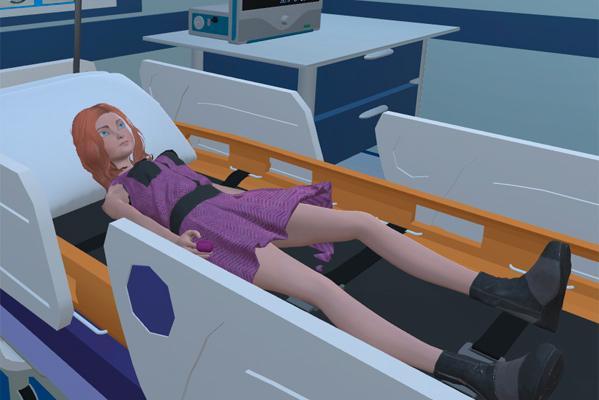
Virtual clinical cases, screen-based simulation, virtual reality, simulated ultrasound and endoscopy. What they have in common is that they train clinical reasoning: which tests you order, what you rule out, in what order you act.
And they have one property no other modality offers: they assess themselves. The system records every decision, every time and every error, and returns a metric that is comparable between students and between cohorts.
When this is the right modality
Choosing the right modality saves more money than negotiating the price of the equipment.
Choose it when…
- Many students have to be trained, or students who are not in the same place.
- Objective, comparable assessment is needed, not the impression of the instructor.
- Reasoning matters more than the movement.
- Students should be able to practise outside class hours.
It isn't the right one if…
- What is being trained is touch: no screen replaces it. See Task trainer →
- The network or workstation infrastructure will not support it.
- There is nobody to maintain the licences and the updates.
How it's used in the classroom
What you need to know before sizing the classroom.
- Ratio
- 1 licence per student, or shared workstations
- Session
- Open — allows practice off site
- Instructor
- Supervision and reading of results
- Recurring cost
- Annual licences, not consumables
How to budget for it properly
The recurring cost is the licence, and that works in your favour: it is known in advance and it scales with the number of students. It is worth choosing the model — per user, per workstation or per site — alongside the teaching plan, and validating the network requirements with IT from the start: that way the rollout is a matter of days.
Who uses it
Specialties that turn to this modality most often.
Common procedures
Equipment in this modality
11 references in the catalogue.

The six modalities
Task trainer
Specific procedural skill.
1,866 items →Anatomical model
Understanding structure and function.
867 items →Patient and equipment simulators
Technical and non-technical skills, and equipment handling.
339 items →Ultra realism
High-impact critical scenarios.
414 items →Standardised patient
Communication and the therapeutic relationship.
230 items →Digital tools
Clinical reasoning and decision-making.
You're viewing this one