

Reference 12712 · Task trainer
Trainer for Wound Care and Bandaging Techniques, Light Skin
- Task trainer
- Dermatology
- Main product
- Medicine
With the Trainer for wound care and bandaging techniques for trainee nurses and doctors, students learn how to care correctly for their patients’ wounds and can practice a wide range of dressing and bandaging techniques.
Price on request
Available in Spain, Portugal and Andorra · delivery time given in the proposal
Downloadable data sheet — features, specifications and delivery time, in PDF.
Need a technical report? Ask us for it and we'll send it within 24 h →
Description
What this equipment is and what it's designed for.
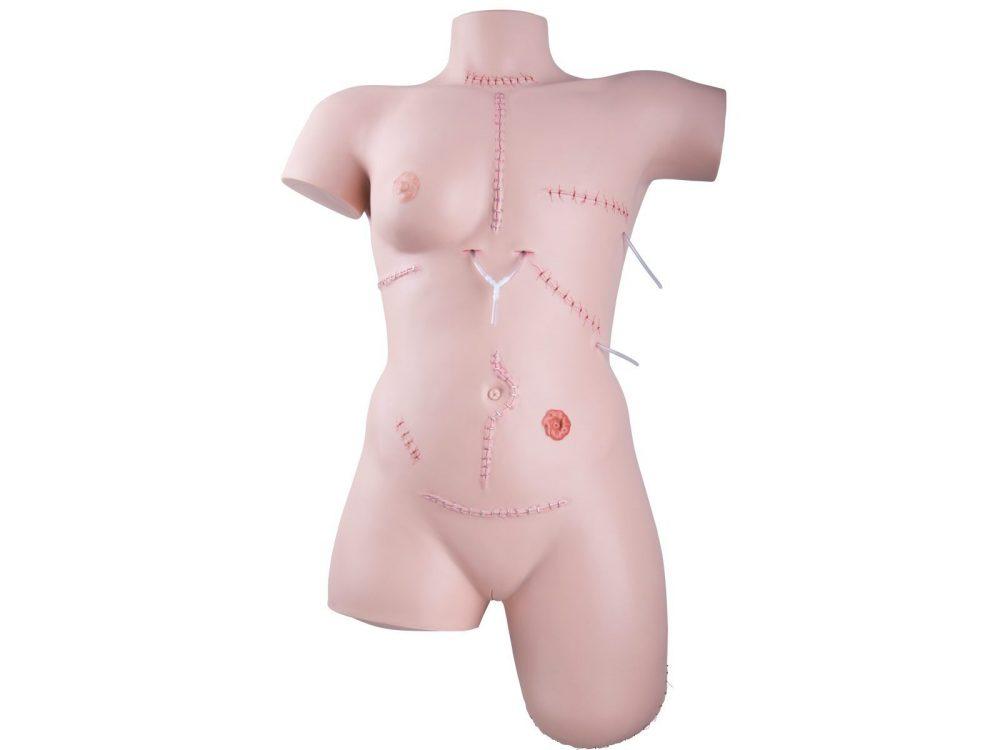
With theTrainer for wound care and bandaging techniques for trainee nurses and doctors, students learn how to care correctly for their patients’ wounds and can practice a wide range of dressing and bandaging techniques. By training, the subsequent care of real patients can be markedly improved and hygiene standards and protocols can be respected.
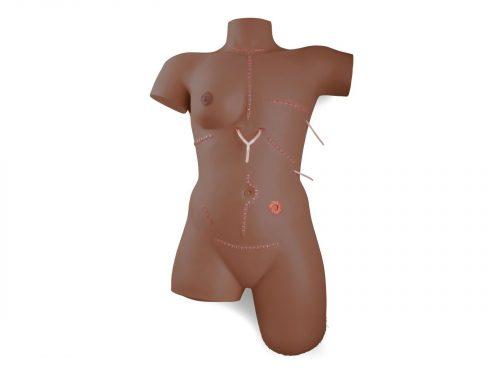
The following wounds and drain systems as the result of surgical procedures and injuries are shown realistically on the torso:
- Wound after a thyroidectomy, center
- Wound after a sternotomy (with drain), center
- Wound after a mastectomy (with drain), right
- Wound after a spleenectomy (with drain), left
- Wound after a thoracotomy (pneumonectomy), right
- Wound after a median laparotomy (e.g. cystectomy), center
- Wound after an appendectomy, right
- Wound after a Pfannenstiel incision (e.g. C-section or abdominal hysterectomy), center
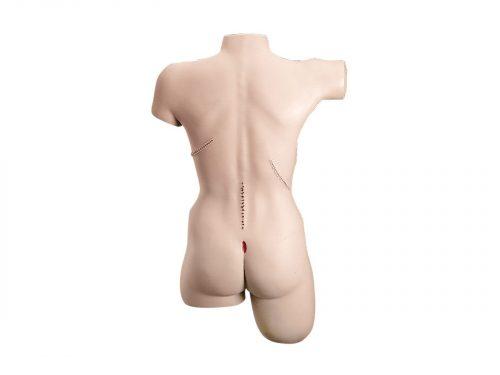
- Wound after a laminectomy, center; rear
- Wound after a nephrectomy (side incision)
- Wound after an amputation (leg stump), left
- Colostomy
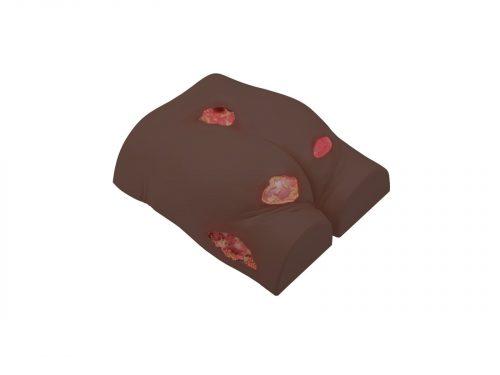
- Decubitus (grade 2), center; rear
The wound care can be carried out using the normal means, so students can practice in conditions as close to reality as possible. Given the flexible structure of the material used, students can practice putting on and changing bandages and dressings in realistic conditions.
What you learn
Task trainer modality. The competencies this equipment trains, in the language of the training plan.
- Care of surgical wounds
- Management of drainage systems
- Application and replacement of adhesive dressings
- Bandaging techniques
- Colostomy care
- Care of the amputation stump
- Care of pressure ulcers
- Compliance with hygiene standards and protocols
Related procedures: Bandages · Wound care
Cases and pathologies
The clinical scenarios that can be simulated with this equipment.
- Thyroidectomy wound, in the centre
- Sternotomy wound with drain, in the centre
- Mastectomy wound with drain, on the right
- Splenectomy wound with drain, on the left
- Tracheotomy (pneumonectomy) wound, on the right
- Midline laparotomy wound, for example from a cystectomy
- Appendicectomy wound, on the right
- Pfannenstiel incision wound, for example from a caesarean section or an abdominal hysterectomy
- Laminectomy wound, on the back
- Nephrectomy wound, with a flank incision
- Amputation wound on the left leg stump
- Colostomy
- Grade II pressure ulcers on the back
Features and what's included
What the equipment does and what comes in the box, as described by the manufacturer.
Features
- Torso that realistically represents surgical wounds and the resulting drainage systems
- Wound care can be carried out with the usual materials, for completely realistic practice
- The flexible structure of the material makes it possible to apply and replace adhesive dressings realistically
Services for this equipment
Services matter: the equipment gets commissioned, the staff know how to use it and maintenance is settled before you start. Include them in your budget and avoid having to raise a second purchase.
- Preventive maintenance We'll let you know when it's due
Documentation
You can download it now or we'll send it on request.
Other related equipment
They train the same technique. Each one approaches it in its own way: none of them replaces this one.


Is this equipment going into a new centre?
If you're equipping a classroom or a whole centre, starting from the shopping list works out expensive. Start from the needs assessment.