


Reference 01455 · Anatomical model
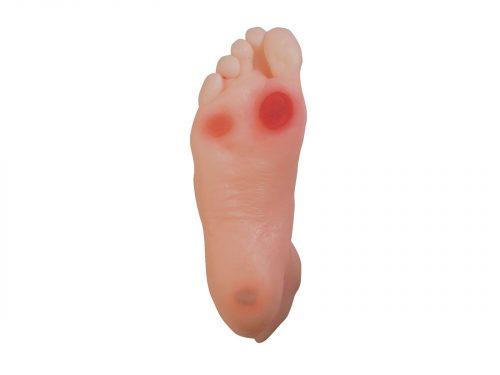
PAT - Pressure injury staging pad
- Anatomical model
- Dermatology
- Main product
- Nursing
Effective tool to educate all healthcare providers, patients, families and caregivers in the identification and staging of pressure injuries
Price on request
Available in Spain, Portugal and Andorra · delivery time given in the proposal
Downloadable data sheet — features, specifications and delivery time, in PDF.
Need a technical report? Ask us for it and we'll send it within 24 h →
Description
What this equipment is and what it's designed for.
‘Pat’ Pressure Injury Staging Model™ is an effective tool to educate all healthcare providers, patients, families and caregivers in the identification and staging of pressure injuries.
This model is also an excellent visual aid for educating those who cannot read well enough to understand basic health care information, allowing them to see what can occur without proper care.
What you learn
Anatomical model modality. The competencies this equipment trains, in the language of the training plan.
- 1 PAT simulator
- 1 Carrying bag (option)
Related procedures: Ulcer · Wound care
Cases and pathologies
The clinical scenarios that can be simulated with this equipment.
- In the past, healthcare professionals were taught wound care through high-quality photographs and videos.
- The 'Pat' Pressure Injury Staging Model™ brings wound care to life in a way that not even the best photographs can.
- Available in Caucasian and African colouring.
Features and what's included
What the equipment does and what comes in the box, as described by the manufacturer.
Features
- Three separate fistulas are present in the abdominal wound area:
- Stomatized Fistula – Easy to observe effluent flow
- Non-Stomatized Fistula – Difficult to observe when effluent is not flowing
- Hidden Fistula – Location is not observed
Includes
- 1 PAT pressure injury staging pad
Sold separately: carrying case (Ref. 01456).
Modules
They extend what this equipment teaches. They are requested separately and are not included in the quotation by default.
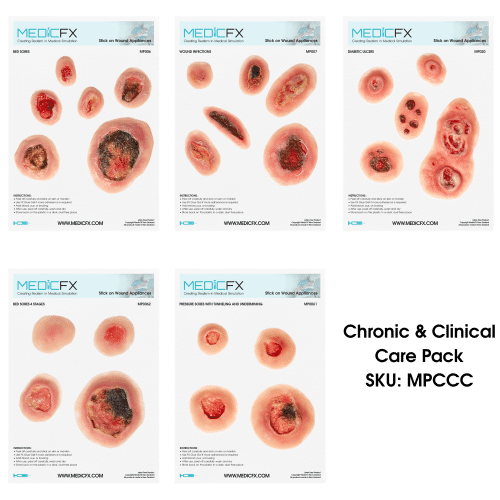
- Stage 1: Both in darkly pigmented and in lightly pigmented skin)
- Stage 2
- Stage 3: With undermining, tunnelling and slough
- Stage 4: Shallow over the malleolus with exposed bone and tendon
- Unstageable eschar/slough wound. The darkly pigmented skin section shows how different a stage 1 can look
- Blood blister
- DTPI: Deep tissue pressure injury
Services for this equipment
Services matter: the equipment gets commissioned, the staff know how to use it and maintenance is settled before you start. Include them in your budget and avoid having to raise a second purchase.
- Preventive maintenance We'll let you know when it's due
Documentation
You can download it now or we'll send it on request.
Other related equipment
They train the same technique. Each one approaches it in its own way: none of them replaces this one.
Is this equipment going into a new centre?
If you're equipping a classroom or a whole centre, starting from the shopping list works out expensive. Start from the needs assessment.