

Reference 10699 · Task trainer
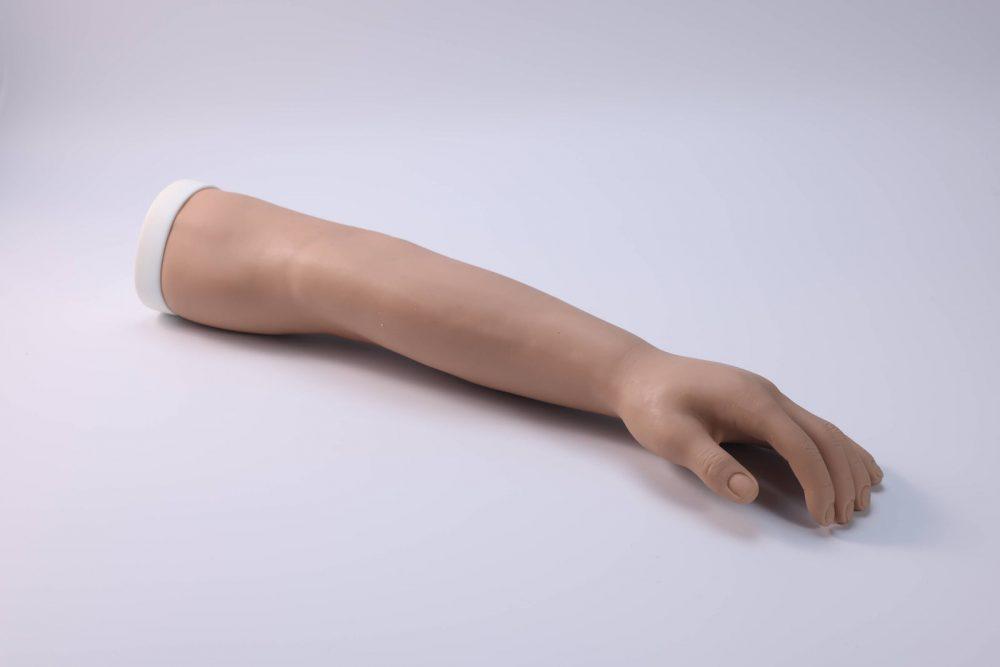
Colles' Fracture Management Training Model
- Task trainer
- Orthopaedic surgery
- Main product
- Medicine
This model simulates an adult Colles’ fracture with accurate anatomical structures, including skin, bones, joints, and muscles, providing a realistic tactile experience for practicing traction, manual reduction, and the application of small splints or casts.
Price on request
Available in Spain, Portugal and Andorra · delivery time given in the proposal
Downloadable data sheet — features, specifications and delivery time, in PDF.
Need a technical report? Ask us for it and we'll send it within 24 h →
Description
What this equipment is and what it's designed for.
Product No.: PC-CLE008.05
 Overview
This model simulates an adult Colles’ fracture with accurate anatomical structures, including skin, bones, joints, and muscles, providing a realistic tactile experience for practicing traction, manual reduction, and the application of small splints or casts.
 Anatomy
Adult upper limb model featuring realistic skin, bones, and muscle structures with accurate Anatomy and touch.
Simulates typical deformities of Colles’ fracture: “fork-like” deformity in side view and “bayonet-like” deformity in front view, with bone crepitus.
 Realism
Flexible joints: elbow can flex and externally/internally rotate; wrist can flex and ulnarly deviate.
Internal radius fracture is palpable, allowing for traction and reduction practice.
Suitable for small splint or cast fixation.
 Cleaning
Clean the trainer with a damp cloth, using warm water and neutral detergent. Do not use any abrasive cleaning agents or materials.
Allow the trainer to completely dry before storing.
Keep away from direct sunlight.
Specifications
|
Package (kg) & Dimension(cm) LxWxH |
2.19 |
60 |
23.5 |
18.5 |
What you learn
Task trainer modality. The competencies this equipment trains, in the language of the training plan.
- Recognise the dinner-fork and bayonet deformities.
- Palpate the radial fracture site.
- Apply traction and perform manual reduction.
- Apply a below-elbow splint or cast.
- Check elbow and wrist movement after immobilisation.
Related procedures: Fracture and dislocation reduction · Immobilisation and splinting · Trauma
Cases and pathologies
The clinical scenarios that can be simulated with this equipment.
- Colles fracture after a fall on the outstretched hand.
- Distal radius fracture in the older patient.
- Fracture care in the emergency department and the orthopaedic clinic.
Features and what's included
What the equipment does and what comes in the box, as described by the manufacturer.
Features
- Adult upper limb with realistic skin, bone, joints and muscle.
- Typical deformities reproduced: dinner-fork on the lateral view and bayonet on the frontal view.
- Elbow with flexion and internal and external rotation; wrist with flexion and ulnar deviation.
- Palpable radial fracture site.
- Accepts traction, manual reduction and immobilisation with a splint or a cast.
Services for this equipment
Services matter: the equipment gets commissioned, the staff know how to use it and maintenance is settled before you start. Include them in your budget and avoid having to raise a second purchase.
- Preventive maintenance We'll let you know when it's due
Documentation
You can download it now or we'll send it on request.
Other related equipment
They train the same technique. Each one approaches it in its own way: none of them replaces this one.
Is this equipment going into a new centre?
If you're equipping a classroom or a whole centre, starting from the shopping list works out expensive. Start from the needs assessment.