

Reference 11267 · Anatomical model
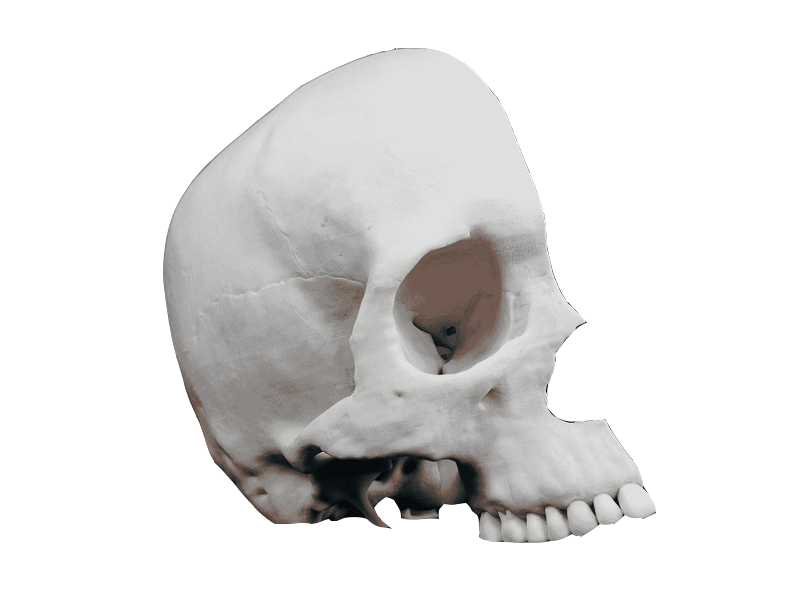
3D Printing Model-Mid-Sagittal Section of the Skull
- Anatomical model
- Anatomy
- Main product
- Medicine
A printed model of the mid-sagittal section of the skull, accurately replicating its internal and external anatomical features using high-precision digital human data, serves as a realistic substitute for studying skull anatomy.
Price on request
Available in Spain, Portugal and Andorra · delivery time given in the proposal
Downloadable data sheet — features, specifications and delivery time, in PDF.
Need a technical report? Ask us for it and we'll send it within 24 h →
Description
What this equipment is and what it's designed for.
Material: Hard Material
Data Source: Digital Human Model
The mid-sagittal section of the skull is a printed model of the mid-sagittal section of the skull, showing the internal and external views of the skull. This model has the same visual perception and touch as the real mid-sagittal section of the skull. It can truly display the internal and external anatomical features of the skull, such as the bony protrusions on the outer wall of the bony nasal cavity, the opening of the sinuses and other complex anatomy The structure can be used as a substitute for the sagittal section of the skull.
Data Resources
Data Source: select data from the high-precision digital human data set, including original sectional data, refined segmentation data, and three-dimensional geometric model of organ structure, including anatomical structures such as bone, muscle, blood vessel, nerve, and ligament. The voxel size of this data set is 0.0384mm * 0.0384mm * 0.1mm. At the same time, the cadaveric specimens fixed with formalin are selected as the reference and comparison basis of the 3D printing model.
Model Making: the voxels in the volume data on the surface of each anatomical structure are extracted from the original section data set, and the texture map of the geometric model is generated to ensure that the appearance of the geometric model of each anatomical structure has a visual perception consistent with the real anatomical specimen.
What you learn
Anatomical model modality. The competencies this equipment trains, in the language of the training plan.
- Identificar las vistas interna y externa del cráneo en el plano sagital medio.
- Reconocer los relieves óseos de la pared externa de la cavidad nasal.
- Localizar los orificios de los senos paranasales.
- Situar las estructuras profundas de la línea media craneal.
- Estudiar la anatomía craneal por el tacto, sin preparaciones cadavéricas.
Cases and pathologies
The clinical scenarios that can be simulated with this equipment.
- Anatomía nasosinusal aplicada a la otorrinolaringología.
- Vías de drenaje de los senos paranasales.
- Referencias para el abordaje endoscópico nasal.
- Estudio de la fosa craneal en la línea media.
Features and what's included
What the equipment does and what comes in the box, as described by the manufacturer.
Features
- Sección sagital media del cráneo en material rígido.
- Muestra a la vez la vista interna y la externa.
- Mismo aspecto visual y mismo tacto que una sección de cráneo real.
- Reproduce estructuras finas y complejas como los orificios de los senos paranasales.
- Sustituye a la preparación de sección sagital de cráneo.
Services for this equipment
Services matter: the equipment gets commissioned, the staff know how to use it and maintenance is settled before you start. Include them in your budget and avoid having to raise a second purchase.
- Preventive maintenance We'll let you know when it's due
Documentation
You can download it now or we'll send it on request.
Other related equipment
They share a specialty with this one. They train different things: none of them replaces it.
Is this equipment going into a new centre?
If you're equipping a classroom or a whole centre, starting from the shopping list works out expensive. Start from the needs assessment.