

Reference 03625 · Patient simulator
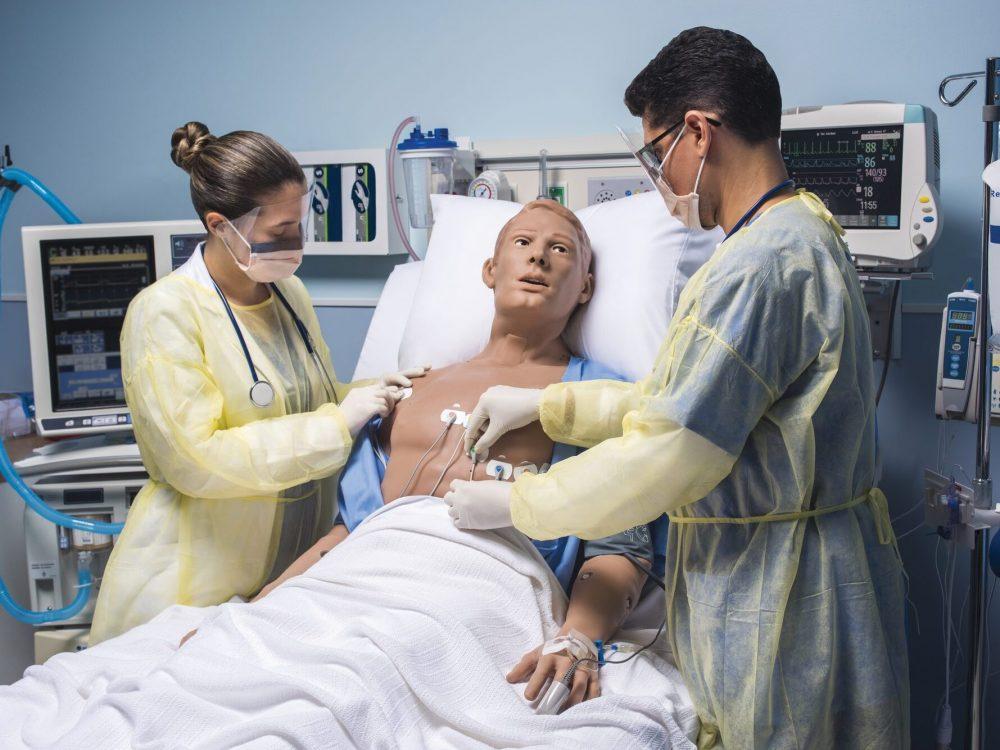
HAL AI - Advanced adult patient simulator with artificial intelligence
- Patient simulator
- Emergencies
- Main product
- Dentistry
Introducing HAL® S5301, the most advanced interdisciplinary patient simulator in the world. From emergency care to ICU and med-surge training, HAL is engineered to fulfill educational objectives across clinical disciplines and blur the lines between simulation and real life.
Price on request
Available in Spain, Portugal and Andorra · delivery time given in the proposal
Downloadable data sheet — features, specifications and delivery time, in PDF.
Need a technical report? Ask us for it and we'll send it within 24 h →
What you learn
Patient simulator modality. The competencies this equipment trains, in the language of the training plan.
Related procedures: Advanced life support · AED/SAED · Airway management · Auscultation · Basic life support · Blood pressure measurement · Cannulation · Catheterization · Chest drainage · Cricothyrotomy · Electrocardiography · Intraosseous · Intravenous · Medication administration and pharmacology · Nasogastric/orogastric tube placement · Needle decompression · Oxygen therapy and ventilation · Patient monitor · TNG / Tracheotomy · Vital signs
Features and what's included
What the equipment does and what comes in the box, as described by the manufacturer.
Features
PRODUCT FEATURES:- Anatomically accurate adult male proportions; height 5’ 9” / 175 cm
- Lifelike skin features palpable landmarks and seamless articulating joints: neck, jaw, shoulders, elbow, wrists, fingers, hips, knees, ankles
- Realistic articulation supports common patient positions: supine, prone, Fowler’s
- Wireless and tetherless; all features are fully operational during transport
- Internal rechargeable battery provides hours of tetherless operation
- Windows tablet PC preloaded with UNI® 3.0 Unified Simulator Control Software
- HAL S5301 Simulation Learning Experiences™ scenario package
- Supports Bluetooth, RF, and wired connectivity
- Compatible with Ultrasound™
- Compatible with Care in Motion™ audio & video debriefing system
- Available in light, medium, or dark skin tones at no extra charge
- Programmable blinking rate, pupil dilation, and eye movement
- Programmable consensual and nonconsensual pupillary response to light stimuli
- Normal and abnormal eye movements and conditions, including strabismus, ptosis, and more
- Interactive eyes can follow a moving object
- Conversational Speech enhanced by artificial intelligence; HAL listens and automatically answers patient history and initial assessment-related questions Auto-generated, natural-sounding voice Scenario and patient profile-dependent responses Follows voice commands including lift arm, look left, look right, and squeeze hand Varies verbal responses consistent with level of consciousness and physiologic state Speech Processing Model: learns and improves understanding and verbal responses over time
- Auto-generated, natural-sounding voice
- Scenario and patient profile-dependent responses
- Follows voice commands including lift arm, look left, look right, and squeeze hand
- Varies verbal responses consistent with level of consciousness and physiologic state
- Speech Processing Model: learns and improves understanding and verbal responses over time
- Wireless streaming voice: be the voice of HAL and listen to participants’ responses in real-time
- Includes large library of high-quality, prerecorded English and Spanish responses
- Record and playback custom speech phrases in any language
- Active mouth movement synchronizes with voice: close, open, smile, unilateral lip droop, and lockjaw
- Active neck movement: rotation, flexion, extension, and reduced cervical movement
- Sound localization: HAL automatically turns head and eyes toward the provider speaking
- Active robotics simulate lifelike expressions; preset library includes left facial droop, right facial droop, pained, quizzical, scared, smiling
- Preprogrammed emotional states automatically express non-verbal cues: normal, worried, anxious, and lethargic
- Active right arm motor reflex: shake hand, squeeze hand, raise arm, withdrawal response, and abnormal posturing (decorticate/ decerebrate)
- Lifelike stroke clinical presentations include facial droop, weakness in the right arm, abnormal posturing, and pain response
- Programmable, automated pain response to pressure-sensitive sites: bilateral supraorbital notch, trapezius pinch (left shoulder), sternal rub, and right middle finger nailbed
- Supports Train of Four monitoring using real devices
- Lifelike partial tonic-clonic and non-tonic-clonic seizures
- Programmable sweating (diaphoresis) and tears
- Auto-generated, natural-sounding voice
- Scenario and patient profile-dependent responses
- Follows voice commands including lift arm, look left, look right, and squeeze hand
- Varies verbal responses consistent with level of consciousness and physiologic state
- Speech Processing Model: learns and improves understanding and verbal responses over time
- Lifelike, spontaneous breathing with selectable normal and abnormal patterns
- Four anterior and posterior lung auscultation fields; new lung sound library
- Programmable bilateral or unilateral chest rise
- Fully internal, patented dynamic lungs and airway support the use of real mechanical ventilators and standard patient circuits; no calibration, proprietary adapters, or external converter adjuncts required
- Supports standard mechanical ventilators and modes of ventilation including: Continuous mandatory ventilation (CMV), volume assist/control, pressure assist/control, pressure support ventilation (PSV), pressure or volume controlled synchronized intermittent mandatory ventilation (SIMV), continuous positive airway pressure (CPAP) Supports therapeutic levels of PEEP
- Continuous mandatory ventilation (CMV), volume assist/control, pressure assist/control, pressure support ventilation (PSV), pressure or volume controlled synchronized intermittent mandatory ventilation (SIMV), continuous positive airway pressure (CPAP)
- Supports therapeutic levels of PEEP
- Programmable advanced airway and lung functions Variable lung unit compliance Variable bilateral and unilateral bronchi resistance Inspiratory effort and rate Respiratory drive Real CO2 exhalation Auto-PEEP
- Variable lung unit compliance
- Variable bilateral and unilateral bronchi resistance
- Inspiratory effort and rate
- Respiratory drive
- Real CO2 exhalation
- Auto-PEEP
- Advanced respiratory effort simulation allows for lifelike weaning/liberation scenarios
- Supports mechanical ventilation while fully mobile
- Left hemo/pneumothorax site supports palpation, incision, chest tube insertion, chest tube placement detection, bleeding, and suture
- Needle thoracentesis site supports needle insertion, detects needle placement, and presents audible hiss
- Presents normal to abnormal capnography waveforms on real devices, including “shark fin” waveform
- Continuous mandatory ventilation (CMV), volume assist/control, pressure assist/control, pressure support ventilation (PSV), pressure or volume controlled synchronized intermittent mandatory ventilation (SIMV), continuous positive airway pressure (CPAP)
- Supports therapeutic levels of PEEP
- Variable lung unit compliance
- Variable bilateral and unilateral bronchi resistance
- Inspiratory effort and rate
- Respiratory drive
- Real CO2 exhalation
- Auto-PEEP
- Bilateral palpable pulses: carotid, brachial, radial, femoral, popliteal, pedal
- Pulse palpation detection and event logging
- Programmable circumoral skin colouration: cyanosis, redness, and pallor
- Programmable oxygen saturation; monitor using real pulse oximetry sensors on the left middle finger
- Supports non-invasive auscultatory and oscillometric blood pressure measurement with real monitors and devices
- Monitor intra-arterial blood pressure using real adjuncts, sensors, and devices
- Bilateral IV access sites support cannulation with flashback, infusion, and sampling
- Radial arterial access site supports catheterisation, flashback, sampling, and IBP monitoring
- Antecubital vein blood draw site on left arm
- Automatic drug recognition detects virtual medications injected into the lower left arm
- Fingerstick glucose testing on the left index finger
- Tibia and humeral intraosseous access and infusion
- Programmable capillary refill time testing located on right middle finger
- Intramuscular injection site on left deltoid
- Aortic, pulmonic, tricuspid, and mitral auscultation fields and new heart sound library
- Supports 4-lead and 12-lead ECG monitoring using real monitoring devices
- Generate cardiac injury, ischemia, and necrosis using the UNI® 3D Myocardial Infarction Model; monitor resulting abnormal ECG rhythms on a real 12-lead ECG monitoring device
- Customize 12-lead waveforms with 12-lead ECG designer interface
- ECG-derived respiratory monitoring
- Supports standard defibrillation, double sequential defibrillation, cardioversion, and pacing with live energy
- Allows for anterior/lateral and anterior/posterior pad placement
- eCPRTM real-time quality feedback and reporting: Time to CPR, compression depth/rate, compression interruptions, ventilation rate, excessive ventilation, smart CPR coach
- Male urinary catheterisation with programmable fluid return
- Computer-controlled urinary output rate and urine and/or blood mixture
- Programmable urinary incontinence
- Internal, auto-refilling 0.7 litre urine reservoir
- Four bowel auscultation fields and new bowel sound library
- Visible gastric distention during excessive bag valve mask ventilations and/or oesophageal intubation
- Internal, auto-refilling 1.2-litre blood reservoir
- Abdominal bleeding wound responds to pressure and packing
- Optional trauma arm and trauma leg accessories feature bleeding wound and tourniquet placement detection
- Computer-controlled blood pressure-dependent bleeding
- Anatomically accurate adult male proportions; height 5’ 9” / 175 cm
- Lifelike skin features palpable landmarks and seamless articulating joints: neck, jaw, shoulders, elbow, wrists, fingers, hips, knees, ankles
- Realistic articulation supports common patient positions: supine, prone, Fowler’s
- Wireless and tetherless; all features are fully operational during transport
- Internal rechargeable battery provides hours of tetherless operation
- Microsoft Surface Pro preloaded with UNI® 3.0 Unified Simulator Control Software
- HAL S5301 Simulation Learning Experiences™ scenario package
- Supports Bluetooth, RF, and wired connectivity
- Compatible with Ultrasound™
- Compatible with Care in Motion™ audio & video debriefing system
- Available in light, medium, or dark skin tones at no extra charge
- Programmable blinking rate, pupil dilation, and eye movement
- Programmable consensual and nonconsensual pupillary response to light stimuli
- Normal and abnormal eye movements and conditions including strabismus, ptosis, and more
- Interactive eyes can follow a moving object
- Conversational Speech enhanced by artificial intelligence; HAL listens and automatically answers patient history and initial assessment-related questions Auto-generated, natural-sounding voice Scenario and patient profile-dependent responses Follows voice commands including lift arm, look left, look right, and squeeze hand Varies verbal responses consistent with level of consciousness and physiologic state Speech Processing Model: learns and improves understanding and verbal responses over time
- Auto-generated, natural-sounding voice
- Scenario and patient profile-dependent responses
- Follows voice commands including lift arm, look left, look right, and squeeze hand
- Varies verbal responses consistent with level of consciousness and physiologic state
- Speech Processing Model: learns and improves understanding and verbal responses over time
- Wireless streaming voice: be the voice of HAL and listen to participants’ responses in real-time
- Includes large library of high-quality, prerecorded English and Spanish responses
- Record and playback custom speech phrases in any language
- Active mouth movement synchronizes with voice: close, open, smile, unilateral lip droop, and lockjaw
- Active neck movement: rotation, flexion, extension, and reduced cervical movement
- Sound localization: HAL automatically turns head and eyes toward the provider speaking
- Active robotics simulate lifelike expressions; preset library includes left facial droop, right facial droop, pained, quizzical, scared, smiling
- Preprogrammed emotional states automatically express non-verbal cues: normal, worried, anxious, and lethargic
- Active right arm motor reflex: shake hand, squeeze hand, raise arm, withdrawal response, and abnormal posturing (decorticate/ decerebrate)
- Lifelike stroke clinical presentations include facial droop, weakness in the right arm, abnormal posturing, and pain response
- Programmable, automated pain response to pressure-sensitive sites: bilateral supraorbital notch, trapezius pinch (left shoulder), sternal rub, and right middle finger nailbed
- Supports Train of Four monitoring using real devices
- Lifelike partial tonic-clonic and non-tonic-clonic seizures
- Programmable sweating (diaphoresis) and tears
- Auto-generated, natural-sounding voice
- Scenario and patient profile-dependent responses
- Follows voice commands including lift arm, look left, look right, and squeeze hand
- Varies verbal responses consistent with level of consciousness and physiologic state
- Speech Processing Model: learns and improves understanding and verbal responses over time
- Lifelike, spontaneous breathing with selectable normal and abnormal patterns
- Four anterior and posterior lung auscultation fields; new lung sound library
- Programmable bilateral or unilateral chest rise
- Fully internal, patented dynamic lungs and airway support the use of real mechanical ventilators and standard patient circuits; no calibration, proprietary adapters, or external converter adjuncts required
- Supports standard mechanical ventilators and modes of ventilation including: Continuous mandatory ventilation (CMV), volume assist/control, pressure assist/control, pressure support ventilation (PSV), pressure or volume controlled synchronized intermittent mandatory ventilation (SIMV), continuous positive airway pressure (CPAP) Supports therapeutic levels of PEEP
- Continuous mandatory ventilation (CMV), volume assist/control, pressure assist/control, pressure support ventilation (PSV), pressure or volume controlled synchronized intermittent mandatory ventilation (SIMV), continuous positive airway pressure (CPAP)
- Supports therapeutic levels of PEEP
- Programmable advanced airway and lung functions Variable lung unit compliance Variable bilateral and unilateral bronchi resistance Inspiratory effort and rate Respiratory drive Real CO2 exhalation Auto-PEEP
- Variable lung unit compliance
- Variable bilateral and unilateral bronchi resistance
- Inspiratory effort and rate
- Respiratory drive
- Real CO2 exhalation
- Auto-PEEP
- Advanced respiratory effort simulation allows for lifelike weaning/liberation scenarios
- Supports mechanical ventilation while fully mobile
- Left hemo/pneumothorax site supports palpation, incision, chest tube insertion, chest tube placement detection, bleeding, and suture
- Needle thoracentesis site supports needle insertion, detects needle placement, and presents audible hiss
- Presents normal to abnormal capnography waveforms on real devices, including “shark fin” waveform
- Continuous mandatory ventilation (CMV), volume assist/control, pressure assist/control, pressure support ventilation (PSV), pressure or volume controlled synchronized intermittent mandatory ventilation (SIMV), continuous positive airway pressure (CPAP)
- Supports therapeutic levels of PEEP
- Variable lung unit compliance
- Variable bilateral and unilateral bronchi resistance
- Inspiratory effort and rate
- Respiratory drive
- Real CO2 exhalation
- Auto-PEEP
- Bilateral palpable pulses: carotid, brachial, radial, femoral, popliteal, pedal
- Pulse palpation detection and event logging
- Programmable circumoral skin colouration: cyanosis, redness, and pallor
- Programmable oxygen saturation; monitor using real pulse oximetry sensors on the left middle finger
- Supports non-invasive auscultatory and oscillometric blood pressure measurement with real monitors and devices
- Monitor intra-arterial blood pressure using real adjuncts, sensors, and devices
- Bilateral IV access sites support cannulation with flashback, infusion, and sampling
- Radial arterial access site supports catheterisation, flashback, sampling, and IBP monitoring
- Antecubital vein blood draw site on left arm
- Automatic drug recognition detects virtual medications injected into the lower left arm
- Fingerstick glucose testing on the left index finger
- Tibia and humeral intraosseous access and infusion
- Programmable capillary refill time testing located on right middle finger
- Intramuscular injection site on left deltoid
- Aortic, pulmonic, tricuspid, and mitral auscultation fields and new heart sound library
- Supports 4-lead and 12-lead ECG monitoring using real monitoring devices
- Generate cardiac injury, ischemia, and necrosis using the UNI® 3D Myocardial Infarction Model; monitor resulting abnormal ECG rhythms on a real 12-lead ECG monitoring device
- Customize 12-lead waveforms with 12-lead ECG designer interface
- ECG-derived respiratory monitoring
- Supports standard defibrillation, double sequential defibrillation, cardioversion, and pacing with live energy
- Allows for anterior/lateral and anterior/posterior pad placement
- eCPRTM real-time quality feedback and reporting: Time to CPR, compression depth/rate, compression interruptions, ventilation rate, excessive ventilation, smart CPR coach
- Male urinary catheterisation with programmable fluid return
- Computer-controlled urinary output rate and urine and/or blood mixture
- Programmable urinary incontinence
- Internal, auto-refilling 0.7-litre urine reservoir
- Male urinary catheterisation with programmable fluid return
- Computer-controlled urinary output rate and urine and/or blood mixture
- Programmable urinary incontinence
- Internal, auto-refilling 0.7-litre urine reservoir
- Internal, auto-refilling 1.2-litre blood reservoir
- Abdominal bleeding wound responds to pressure and packing
- Optional trauma arm and trauma leg accessories feature bleeding wound and tourniquet placement detection
- Computer-controlled blood pressure-dependent bleeding
Consumables and spare parts
What this equipment will need next year.
-
HAL AI - Abdominal wound insert Abdominal wound insert. Original replacement part, compatible with the HAL AI adult patient simulator with artificial intelligence (Ref. 3625). Set of 2.14014
-
HAL AI - Blood draw insert Blood draw insert. Original replacement part, compatible with the HAL AI adult patient simulator with artificial intelligence (Ref. 3625). Set of 3.14016
-
HAL AI - IM injection insert IM injection insert. Original replacement part, compatible with the HAL AI adult patient simulator with artificial intelligence (Ref. 3625). Set of 3.14017
-
HAL AI - Left forearm vein and artery insert Left forearm vein and artery insert. Original replacement part, compatible with the HAL AI adult patient simulator with artificial intelligence (Ref. 3625). Set of 5.14019
-
HAL AI - Left hand vein insert Left hand vein insert. Original replacement part, compatible with the HAL AI adult patient simulator with artificial intelligence (Ref. 3625). Set of 3.14021
-
HAL AI - Left humerus I/O bone Left humerus I/O bone. Original replacement part, compatible with the HAL AI adult patient simulator with artificial intelligence (Ref. 3625). Set of 3.14018
-
HAL AI - Left index glucose finger Left index glucose finger. Original replacement part, compatible with the HAL AI adult patient simulator with artificial intelligence (Ref. 3625). Set of 5.14020
-
HAL AI - Needle decompression insert Needle decompression insert. Original replacement part, compatible with the HAL AI adult patient simulator with artificial intelligence (Ref. 3625). Set of 5.14022
-
HAL AI - Right forearm vein insert Right forearm vein insert. Original replacement part, compatible with the HAL AI adult patient simulator with artificial intelligence (Ref. 3625). Set of 5.14023
-
HAL AI - Right hand vein insert Right hand vein insert. Original replacement part, compatible with the HAL AI adult patient simulator with artificial intelligence (Ref. 3625). Set of 3.14024
-
HAL AI - Right tibia I/O bone Right tibia I/O bone. Original replacement part, compatible with the HAL AI adult patient simulator with artificial intelligence (Ref. 3625). Set of 3.14025
-
HAL AI - Simulated blood concentrate Simulated blood concentrate. Original consumable, compatible with the HAL AI adult patient simulator with artificial intelligence (Ref. 3625). Set of 4.14026
-
HAL AI - Simulated glucose solution kit (adult) Simulated glucose solution kit (adult). Original consumable, compatible with the HAL AI adult patient simulator with artificial intelligence (Ref. 3625).14015
-
HAL AI - Simulated urine concentrate Simulated urine concentrate. Original consumable, compatible with the HAL AI adult patient simulator with artificial intelligence (Ref. 3625).14027
-
HAL AI - Trachea insert Trachea insert. Original replacement part, compatible with the HAL AI adult patient simulator with artificial intelligence (Ref. 3625). Set of 6.14028
-
HAL AI - Tube thoracostomy insert Tube thoracostomy insert. Original replacement part, compatible with the HAL AI adult patient simulator with artificial intelligence (Ref. 3625). Set of 6.14029
-
Mineral oil Mineral oil. Original consumable, compatible with the patient simulators VICTORIA, HAL AI, HAL, PED HAL, PREMIE HAL and SUPER TORY.14002
-
VICTORIA - Syringe labels (100pcs/set) Replacement identification labels for syringes used with the VICTORIA obstetric-birth simulator, set of 100 units.01720
Services for this equipment
Services matter: the equipment gets commissioned, the staff know how to use it and maintenance is settled before you start. Include them in your budget and avoid having to raise a second purchase.
- Installation and setup Technician · at your centre
- Equipment usage training Trainer · at your centre
- Preventive maintenance We'll let you know when it's due
Documentation
You can download it now or we'll send it on request.
Other related equipment
They train the same technique. Each one approaches it in its own way: none of them replaces this one.
-
 HAL - Advanced Multipurpose Patient Simulator
See details →
-
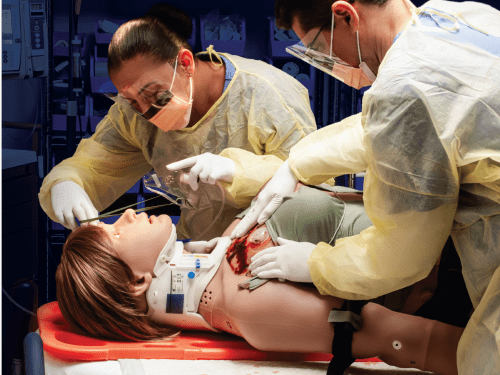 PHOEBE - Multitrauma female patient simulator
See details →
-
 HAL - HI-FI patient simulator - UNI
See details →
-
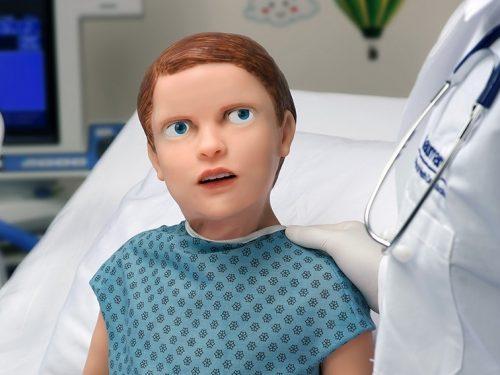 HAL Paediatric - HI-FI paediatric simulator (5 years) - UNI
See details →
-
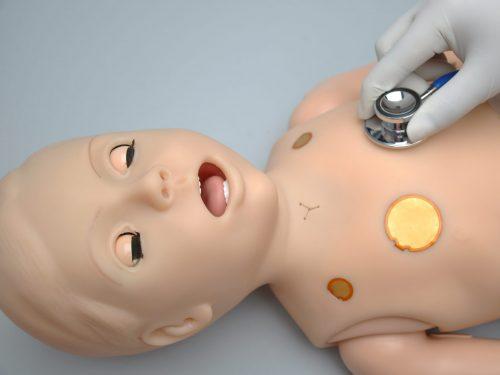 PED HAL - Advanced Paediatric simulator (1 year) - UNI
See details →
- PED HAL - Paediatric simulator (5 years) - 3000 Series See details →
Is this equipment going into a new centre?
If you're equipping a classroom or a whole centre, starting from the shopping list works out expensive. Start from the needs assessment.