

Reference 13991 · Patient simulator
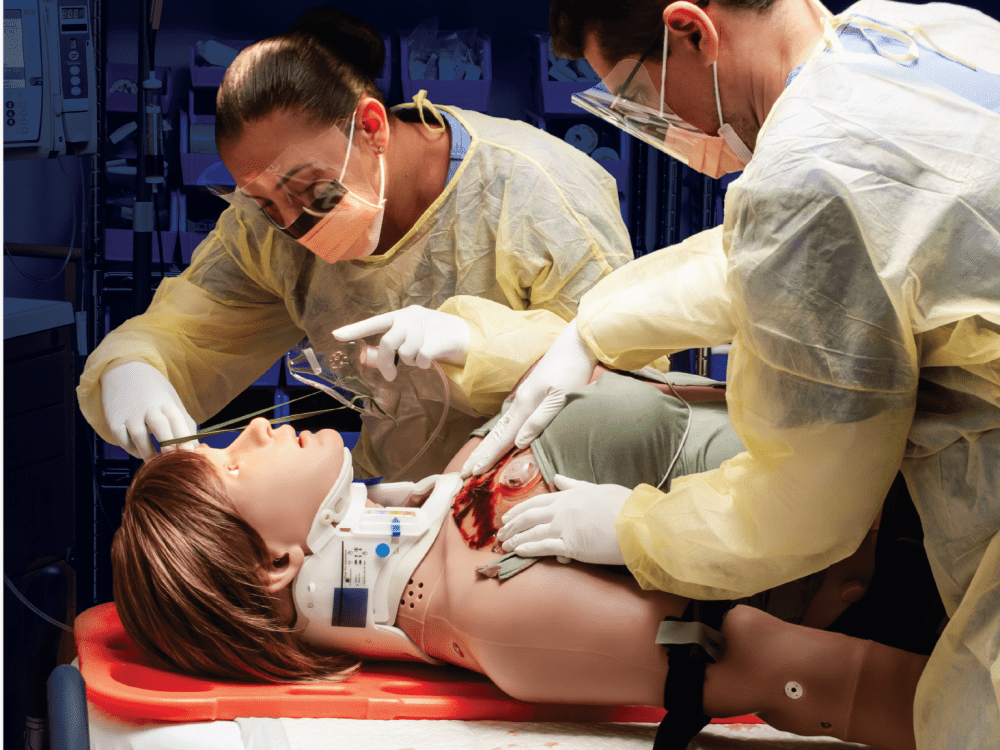
PHOEBE - Multitrauma female patient simulator
- Patient simulator
- Emergencies
- Main product
- Medicine
Ultra-high-fidelity female patient simulator for emergency, trauma and prehospital training, with active bleeding, penetrating wounds and interchangeable traumatic amputations.
Price on request
Available in Spain, Portugal and Andorra · delivery time given in the proposal
Downloadable data sheet — features, specifications and delivery time, in PDF.
Need a technical report? Ask us for it and we'll send it within 24 h →
Description
What this equipment is and what it's designed for.
Trauma training has been built on male bodies. PHOEBE is a full patient simulator with genuine female anatomy — proportions, pelvis, breast and external genitalia — and with it, what is not exceptional in clinical practice stops being exceptional in the simulation lab: assessment, examination and decision-making change when the patient is a woman.
It is an ultra-high-fidelity simulator, wireless and tetherless: every feature stays operational during transport, so a prehospital scenario can start in the street, continue in the ambulance and finish in the resuscitation bay without breaking the simulation. An internal 2.9-litre auto-refilling reservoir sustains continuous arterial and venous bleeding, and blood loss is monitored in real time across every active site.
Haemorrhage control is the core of the platform. The inguinal junctional wound responds to direct pressure, haemostatic wound packing and junctional tourniquet application; the interchangeable amputations — below-elbow arm, above-knee and below-knee leg — bleed with a rate and pulse quality dynamically synchronised to simulated blood pressure and heart rate, and respond to tourniquet position and tightness. The sucking chest wound bubbles audibly and accepts an occlusive dressing; the open-book pelvis presents crepitus and external foot rotation.
It is driven from a tablet running UNI 3 control software, which logs what the learner does, and it supports the AI conversational speech option: PHOEBE answers history and primary survey questions herself, appropriately to the simulated level of consciousness.
What you learn
Patient simulator modality. The competencies this equipment trains, in the language of the training plan.
- Primary and secondary survey of the multitrauma patient.
- Haemorrhage control: direct pressure, haemostatic wound packing, limb tourniquet and junctional tourniquet.
- Pelvic binder application and management of the open-book pelvic fracture.
- Airway management, including the difficult airway and surgical access by cricothyrotomy and tracheostomy.
- Needle chest decompression and chest tube placement.
- Treatment of the open pneumothorax with a vented chest seal dressing.
- Vascular access in the shocked patient: peripheral IV and sternal, humeral and tibial intraosseous routes.
- Advanced life support: CPR with quality feedback, defibrillation, synchronised cardioversion and pacing.
- Drug administration and fluid therapy, including high-volume transfusion.
- Care of the traumatic amputation and fitting the tourniquet to the stump.
- Urinary catheterisation and genitourinary assessment in the trauma patient.
- Focused history taking and communication with the patient during the primary survey.
- Team working and patient handover across the prehospital-to-hospital continuum.
Related procedures: Advanced life support · AED/SAED · Airway management · Auscultation · Basic life support · Bleeding control and tourniquet · Blood pressure measurement · Burns · Cannulation · Catheterization · Chest drainage · Cricothyrotomy · Electrocardiography · Intramuscular · Intraosseous · Intravenous · Medication administration and pharmacology · Needle decompression · Oxygen therapy and ventilation · Patient mobilisation and transfer · Patient monitor · TNG / Tracheotomy · Tracheotomy · Trauma · Vital signs · Wound care
Cases and pathologies
The clinical scenarios that can be simulated with this equipment.
- Multitrauma with exsanguinating haemorrhage.
- Open pneumothorax from a sucking chest wound.
- Haemothorax of programmable volume.
- Inguinal and femoral junctional haemorrhage.
- Traumatic amputation of the upper and lower limb.
- Open-book and lateral compression pelvic fracture.
- Haemorrhagic shock and the response to volume replacement.
- Difficult airway from laryngeal oedema and pharyngeal swelling.
- Inhalation burn injury of varying severity.
- Head injury with pupillary findings: unilateral blown pupil, ptosis, strabismus and disconjugate gaze.
- Cardiac arrest in the trauma patient.
- Vaginal and rectal haemorrhage.
- Urinary retention and incontinence.
- Preprogrammed Simulation Learning Experiences scenario library.
Features and what's included
What the equipment does and what comes in the box, as described by the manufacturer.
Features
General
- Anatomically accurate adult female proportions: 63.5 kg in weight and 173 cm in height.
- Lifelike skin with palpable landmarks and seamless articulating joints.
- Wireless and tetherless: all features remain fully operational during transport.
- Internal rechargeable battery gives hours of tetherless operation, with an interchangeable auxiliary battery for extended use.
- Tablet PC preloaded with UNI 3.0 unified simulator control software.
- PHOEBE Simulation Learning Experiences scenario package.
- Supports wireless and wired connectivity.
- Compatible with the simulated ultrasound system.
- Compatible with the Care in Motion audio and video debriefing system.
- Available in light, medium or dark skin tone at no extra charge, selected at initial order.
Airway
- Anatomically accurate oral cavity and upper airway.
- Programmable difficult airway conditions: laryngeal oedema and pharyngeal swelling.
- Interchangeable inserts simulating inhalation burn injury of varying severity.
- Supports airway management with real adjuncts: bag-valve-mask, endotracheal tube, supraglottic airway devices, laryngeal mask airway, and oropharyngeal and nasopharyngeal airways.
- Endotracheal tube placement depth is detected and logged, and oesophageal intubation, correct tracheal placement and right mainstem bronchus intubation are each detected independently.
- Gastric distention visible with oesophageal intubation or inadequate bag-valve-mask technique.
- Surgical airway access supports cricothyrotomy and tracheostomy.
- Airway sounds synchronised with spontaneous and assisted ventilations.
Breathing
- Spontaneous breathing with programmable normal and abnormal respiratory patterns.
- Thoracoabdominal asynchrony.
- Visible chest rise with positive pressure ventilation, programmable unilaterally or bilaterally.
- Right mainstem bronchus intubation produces unilateral chest rise consistent with the anatomical presentation.
- Four independent anterior lung auscultation fields: right upper, right lower, left upper and left lower.
- Exhales real CO2: end-tidal CO2 waveform and colorimetric detection with real capnography devices; an internal CO2 canister allows tetherless operation.
- Programmable SpO2, monitored with real pulse oximetry on the left index finger.
Cardiac
- Heart sounds auscultated at the aortic, pulmonic, tricuspid and mitral landmarks.
- Supports cardiac monitoring via 3-lead ECG and ECG-derived respiratory monitoring using real equipment.
- CPR quality detection and feedback: compression depth, rate and interruptions logged in real time.
- Supports synchronised cardioversion, defibrillation and pacing using live energy delivery.
Circulation
- Bilateral palpable pulses at carotid, brachial, radial, femoral, popliteal and pedal sites; pulse quality varies with the simulated haemodynamic state.
- Blood pressure assessable by non-invasive monitoring, auscultation and palpation.
- Programmable circumoral skin coloration changes: cyanosis, pallor or redness.
- Bilateral antecubital peripheral IV access with flashback and continuous infusion capability.
- Supports high-volume blood transfusion.
- Intramuscular injection sites: left deltoid and left quadricep.
- Sternal, right tibial and left humeral intraosseous access, supporting powered IO drill insertion, aspiration and infusion.
- Automatic virtual drug recognition at the intramuscular sites and at the humeral, tibial and sternal IO sites.
Neurologic
- Pupils reactive to light with programmable dilation; independent ocular findings include strabismus, blepharospasm, ptosis, unilateral blown pupil and disconjugate gaze.
- Conversational Speech AI ready: PHOEBE answers patient history and primary survey questions herself, appropriately to the simulated level of consciousness.
- Wireless voice streaming: the instructor can voice PHOEBE remotely and monitor participant communications in real time.
Trauma
- Right midclavicular, bilateral midaxillary and right groin sites configurable as healthy or as penetrating wound sites. The right lower arm and leg are configurable as a healthy limb or as a traumatic amputation stump.
- Internal auto-refilling 2.9-litre simulated blood reservoir with real-time blood volume monitoring.
- Next-generation simulated blood: highly realistic colour, consistency and bubbling, engineered to prevent internal system clogging and inhibit mould growth.
- Sucking chest wound simulates an open pneumothorax with an audible bubbling sound and supports occlusive dressing application.
- Chest decompression sites support needle thoracostomy at the left 2nd intercostal space midclavicular line and at the bilateral 4th/5th intercostal space anterior midaxillary line.
- Bilateral chest tube sites support palpation, tube thoracostomy insertion, blood drainage and wound closure.
- Programmable haemothorax volume, drained via the chest tube.
- Pelvic fracture presentation with configurable crepitus on palpation.
- Each leg is independently configurable for external rotation, supporting unilateral or bilateral lower-extremity positioning to simulate open-book and lateral compression injury patterns.
- Programmable vaginal and rectal haemorrhaging.
- Inguinal and femoral groin wound simulating high-volume arterial or venous junctional haemorrhage: it responds to direct pressure and haemostatic wound packing, supports junctional tourniquet application, and logs packing and occlusion.
- Interchangeable right arm below-elbow, right leg above-knee (transfemoral) and right leg below-knee (transtibial) amputations, with arterial and venous haemorrhage whose bleeding rate and pulse quality are dynamically synchronised to simulated blood pressure and heart rate.
- Tourniquet placement anywhere from 5 cm proximal to the wound up to and including high-and-tight positioning achieves haemorrhage control, and the bleeding rate responds to tourniquet tightness.
- Total blood loss is monitored continuously across all active wound sites, and bleeding stopped is logged when every actively bleeding site is fully controlled.
Genitourinary
- Realistic female external genitalia, supporting urinary catheter insertion and placement.
- Programmable urinary function: urinary retention, urinary incontinence and urine output rate.
- Realistic breast anatomy for assessment training.
Includes
- PHOEBE S6100 multitrauma female simulator, in light, medium or dark skin tone.
- Four-year subscription to AI conversational speech.
- Simulation Learning Experiences guidebook and preprogrammed scenario library.
- Tablet PC with UNI 3 control software pre-installed.
- Interchangeable trauma wounds and limbs.
- Accessories kit.
- Simulated blood concentrate.
- Battery charger.
- User guide.
Options
They extend this equipment. They are requested separately and are not included in the quotation by default.
-
VITALS - bedside patient monitor The Vitals™ Portable Patient Monitor offers participants the functionality and versatility of a wireless transport patient monitor.01929
-
VITALS - portable patient monitor The Vitals™ Portable Patient Monitor offers participants the functionality and versatility of a wireless transport patient monitor.01930
Services for this equipment
Services matter: the equipment gets commissioned, the staff know how to use it and maintenance is settled before you start. Include them in your budget and avoid having to raise a second purchase.
- Installation and setup Technician · at your centre
- Equipment usage training Trainer · at your centre
- Preventive maintenance We'll let you know when it's due
Documentation
You can download it now or we'll send it on request.
Other related equipment
They train the same technique. Each one approaches it in its own way: none of them replaces this one.
-
 HAL - HI-FI patient simulator - UNI
See details →
-
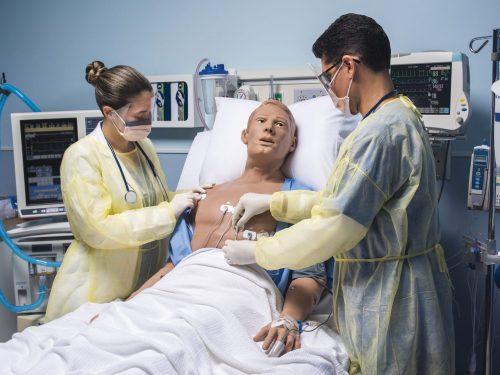 HAL AI - Advanced adult patient simulator with artificial intelligence
See details →
-
 HAL - Advanced Multipurpose Patient Simulator
See details →
-
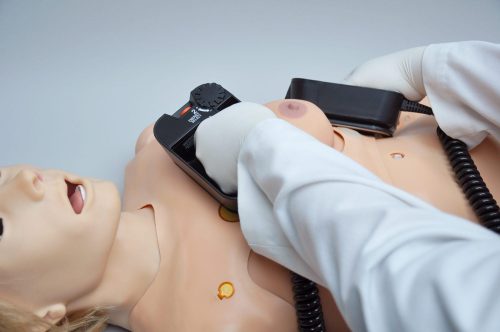 SUSIE - Adult simulator for prehospital and nursing care
See details →
-
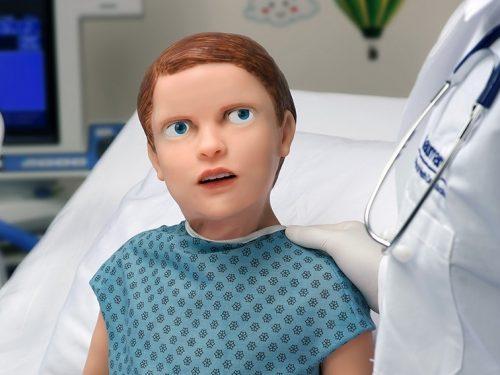 HAL Paediatric - HI-FI paediatric simulator (5 years) - UNI
See details →
-
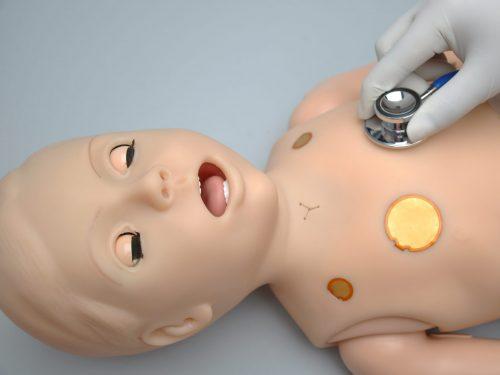 PED HAL - Advanced Paediatric simulator (1 year) - UNI
See details →
Is this equipment going into a new centre?
If you're equipping a classroom or a whole centre, starting from the shopping list works out expensive. Start from the needs assessment.